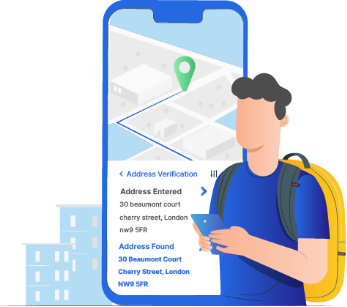

International Address Data Cleaning: Meaning, Challenges, and More
The U.S. has thousands of companies with branches worldwide. Also, small and medium-sized businesses have started to expand internationally. Hence, having a system to conduct international address data cleaning is crucial.
Businesses should verify the mailing addresses of customers, suppliers, and associates to conduct operations hassle-free. It lets you send mail, store data, and make decisions. You don’t risk mail returns or other problems.
International address data cleaning is the solution to this. It allows you to cross-check delivery addresses before you use them for your business operations. This blog discusses its meaning, challenges, and more. Let us begin!
Key Takeaways:
- International address cleansing is the process of verifying global addresses.
- It splits the addresses into small parts to check and validate every part.
- The top challenges during the process are language issues, formatting, and foreign address formats. It hurts the data quality and makes global address cleaning hard.
- PostGrid’s Address Verification solution allows you to check addresses of over 245 countries and territories.
What Is International Address Data Cleaning?
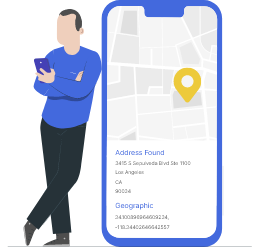
Global address validation helps you check foreign postal addresses against local postal databases. It ensures the addresses are real and can receive mail. The process fixes typos and splits the address into parts. Also, it formats delivery addresses to match the country's standard.
Looking up and combining data for thousands or millions of international addresses is hard. Keeping track of each country’s address format takes a lot of time. But international address data cleansing lets you check addresses and organize their components.
International address accuracy means checking a non-US address against the official address database of the country where the address exists. Just like in the U.S., a global address is considered valid when it matches an entry in that country’s authoritative address records. An address fails validation when it does not match anything in the official database. But please note that address quality can differ a lot between countries.
Foreign address formats are the standard ways to write addresses outside the U.S.. No single authority decides these formats. Each country’s postal service sets its own rules. For example, Canada Post decides the correct address format in Canada.
There are over 245 countries and territories, and each has its own address format. Tools like PostGrid help you conduct international address data cleansing without hassle. You can use it with single address entry, bulk uploads, or through an API.
💡Also Read: Address Autocomplete Customer Satisfaction
Challenges in International Address Data Cleaning
International address data cleaning can be challenging. Getting the data is expensive, whether you collect it yourself or buy it. Checking addresses against the database costs money. Writing the code to handle all the different address formats is also tricky.
Here are the top reasons for global address validation to be complex and expensive:
Foreign Address Formats
You might have expected to use a single address format to write clean international addresses for every country. But there is no single “foreign address format.” Every country has its own format. That means there are 245+ possible formats. You need to look up the format for each country first.
Even after choosing a country, one example address can’t show every possible case. Abbreviations, letter casing, apartments, and P.O. boxes make it hard to get the address correct. The more you ship, the bigger the problem becomes. It is where international address data cleaning gets complex.
For example, the United States Postal Service (USPS) has Publication 28. It is 228 pages long. It covers everything from abbreviating Spanish words to handling rural route addresses. Also, it helps you maintain B2B mailing lists. Canada’s rules are 14 pages, New Zealand’s are 40, and the UK’s are 48. Add up the standards for 245+ countries, and you get thousands of pages of address rules.
The first step in international address data cleaning is to avoid searching for foreign address formats yourself. Instead, you let a tool handle the thousands of pages of international address rules. Look for a system that can turn addresses into an easy-to-use list. The best tools do more than just reformat addresses. They can also alert you if there are any problems with the addresses entered.
You provide the addresses. The tool validates them. Thus, you can ensure they are clean international addresses that are shipping-ready. Then it formats the address according to the standards of the destination country.
💡Also Read: Address Verification Fraud Prevention Protects Your Business
Global Address Validation Components
Have you worked with domestic addresses or those outside the U.S.? If so, you see some differences when ensuring international address accuracy.
For example, many countries don’t have clear divisions like the U.S. states. What the U.S. calls “states” are “provinces” for some other countries. Also, they are often called “administrative areas” elsewhere. It matters because not every country has defined states. Yet, the postal service still needs to know which part of the country the mail is going to.
Some people use Latin letters, like these. Many people don’t. It can cause delivery problems. To help, some solutions simplify the process. Checking international address accuracy is hard. But it’s worth it. Clean data helps businesses work better.
Accuracy Issues in Global Delivery Addresses
Understanding what global address validation means is less important than knowing what you want from it. Do you need to confirm that the whole address is valid and deliverable? Or do you only want to check if the city or the street part is correct?
The USPS has a very organized postal system. Thus, it is easy to conduct international address data cleaning. The USPS serves over 150 million delivery points across the country. They deliver mail every day. If everyone got a letter on the same day, postal workers would make 150 million stops in one day.
Not every country is that organized to simplify international address data cleaning. Most countries don’t have Delivery Point Verification (DPV). Their postal services simply don’t keep data at that level. Out of the mailing countries, only 12 have DPV data. They include
- Austria
- Canada
- Finland
- Singapore
- Netherlands
- Belgium
- France
- Germany
- New Zealand
- Sweden
- The United Kingdom, and
- The U.S.
Many postal systems can’t confirm if a street in an address is real. Others can check the street, but that’s all. In those places, mail still gets delivered because the postal worker personally knows where to take it. But that knowledge isn’t stored at the post office.
Language Script Issues
Imagine your database has customers from around the world. You need clean international addresses. But you see this:
中国北京市东城区前门大街32号
Дворцовая площадь д. 2, г. Санкт-Петербург, Россия
221B Baker Street, London, UK
The last one is easy to read because it uses the Latin alphabet. The others may be confusing if you don’t know their writing systems. To read and process them more easily, it helps to change them into one standard alphabet. That process is called transliteration.
Transliteration in international address data cleaning changes addresses from non-Latin scripts into Latin letters. It helps people who use Latin-based languages read them. It benefits global businesses, shipping companies, and travelers. Also, it makes cross-border communication easier.
Furthermore, transliteration helps when web forms don’t support many scripts. Users can still enter their address in a way the system accepts. It gives a standard way to convert different scripts into one format. It makes international address data cleaning simple and quick.
💡Also Read: virtual mailbox vs po box
Steps Businesses Should Take to Conduct International Address Data Cleaning
Update and Verify Addresses Using an International Address Verification Solution
It is frustrating when you can’t merge address datasets because users entered them incorrectly. The first step to fixing this is to standardize each international address. It cleans your data and stops mismatched information.
PostGrid’s Address Verification solution takes incorrect address details and breaks them into parts. You can call this process “parsing.” It then standardizes each part so duplicate addresses can be matched easily. After standardizing your datasets, you can compare and remove duplicates quickly and without hassle.
Block Bad Data From Entering Your System
After international address data cleaning, you want to keep it accurate. Most users don’t know how to spell or format addresses for many countries correctly. Mistakes and wrong formats can quickly return to your database.
An address autocomplete solution stops bad addresses from entering your database. It suggests correct and complete addresses as users type. It makes forms easier to fill out and improves accuracy. Also, it reduces form abandonment and incorrect country address data. You can get the autocomplete feature with a platform that offers the international address data cleaning process.
Regularly Cleanse and Update Addresses
You need to maintain clean international addresses regularly. International address data cleaning helps you conduct address lookups and keep your database clean. Once set up, they work automatically, keeping your data accurate every day.
💡Also Read: mailing rates to Canada
How Does PostGrid Help You With International Address Data Cleaning?
PostGrid’s Address Verification solution helps you parse, standardize, autocomplete, and validate addresses. You can use it to check addresses of 245+ countries and territories. Hence, you need not worry about serving your international audiences and delivering mail across borders.
You can conduct international address data cleaning by using our solution. All you must do is integrate our API into your website or CRM. Also, you can use our online dashboard to look up clean international addresses.
Apart from these features, PostGrid offers
- Geocoding
- National Change of Address (NCOA)
- CASS-certified validation for U.S. addresses
- SERP-certified validation for Canadian addresses, and so on.
Sign up here to learn more about international address data cleaning with PostGrid!