
What Is Real-Time Address Verification and Why Does Business Need It?
Real-time address verification checks, corrects, validates, and standardizes postal addresses as soon as users provide them. Besides, bad addresses are the primary reason behind failed deliveries, delays, returns to sender, and costly reshipments.
It is common for customers to mistype street addresses, provide the wrong postal code, or simply provide an address that doesn’t exist. You cannot compromise your CRM systems, ecommerce platforms, shipping systems, or customer databases by letting bad addresses slip by.
Businesses with real-time address verification spot these issues proactively before they escalate into operational issues. They can also enrich addresses with geocodes, demographic information, census data, and USPS Residential Delivery Indicator (RDI).
TL;DR
- Real-time address verification prevents bad addresses from disrupting deliveries and onboarding workflows.
- Businesses can reduce returns, reshipments, and manual corrections with address verification.
- Fuzzy matching, census data, geocodes, and move-data information enrich addresses.
- Businesses like ecommerce, finance, insurance, and logistics can collect cleaner data with address autocomplete.
Key Takeaways
- Real-time address verification checks postal addresses against authoritative databases at the point of entry.
- Traditional address verification validates records periodically, not in real-time, leaving scope for invalid addresses to enter databases.
- Incorrect input, nonexistent addresses, and incomplete information are the primary reasons behind invalid addresses.
- Geocoding helps businesses extract geographic coordinates to run location-based services and data analytics.
What Is Real-Time Address Verification?
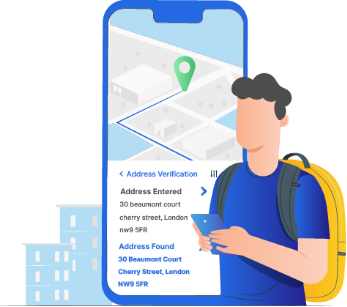
Real-time address verification checks and validates addresses at the point of entry. It flags issues or illegitimate addresses before they enter your database and compromise your operations. For example, real-time address verification stops an ecommerce company from delivering to an invalid or imaginary address.
It could be a highly useful solution for those businesses that manage high-volume transactions or operate in regions with complicated addressing norms. In contrast, the traditional batch address verification process checks records periodically. They cannot catch issues in real time. Everything is scheduled, and real issues are not detected before they escalate. For this reason, implementing a real-time address verification is a smart decision to:
- Suggest a corrected decision.
- Standardize the address
- Fill in the missing information
- Return additional information
Reasons Why an Address is Unreal or Invalid
Real-time address verification systems can mark addresses as unreal or invalid. These unreal addresses do not exist and are often fabricated by fraudsters. Incorrect addresses might exist at the same time but are marked for various reasons. In both cases, the address is undeliverable and requires correction. Let’s explore the common reasons behind these scenarios;
Incorrect Input
It is possible for users to make mistakes while entering their address. For example, typos in the street address, transposed postal codes, or selecting the wrong state abbreviations. These mistakes will automatically render the address invalid and undeliverable. You might face operational hurdles if you leave them unattended.
Nonexistent Address
This is typically done either to commit fraud or just to use the free trial of your services. Real-time address verification can spot and stop these addresses at the point of entry. So, you stop degrading your database with such fake addresses.
Unoccupied or Vacant
Businesses cannot use or mail to a vacant address. Real-time address verification helps you confirm if an address is mailable or not. A property may be vacant, under construction, abandoned, or temporarily unoccupied. So, even a real building could be unavailable for delivery.
Not Registered
There are two types of addresses under this category: “not registered” and “not yet registered.” US citizens must register their address or apply for an address change every time they move. This means residents must register to receive mail, and USPS can only maintain the records.
These addresses often include new developments, newly assigned street numbers, or newly created units. For this reason, businesses should consider alternative verification methods or manual review if necessary.
Not Serviceable
Some addresses might be “outside the service area,” and USPS cannot deliver mail to these locations. It is a rare scenario, but it could happen, especially with remote or rural addresses. Real-time address verification with geocoding can help a business know about serviceability before approving an address.
Incomplete Information
Sometimes, users might not provide the complete address. There could be a missing apartment unit, ZIP code, city, state, or an incomplete street name. Altogether, these missing components will make the address invalid. Real-time address verification with autocomplete capabilities can solve this problem by fetching the missing elements.
PO Boxes
A PO Box address isn’t invalid in the first place. In fact, it is a genuine address for mail delivery. However, you cannot rely on them when you need a physical residential or commercial address. So, you can only accept PO Boxes if they fit in the specific workflow. For example, a PO Box address is unreliable for KYC but acceptable for regular mail.
💡Also Read: Address Standardization API
Benefits of Implementing a Real-Time Address Verification System
Enhanced Data Quality
Real-time address verification helps businesses maintain high-quality, accurate data from the point of entry. So, the customer information can be useful in CRMs, shipping systems, analytics databases, and marketing platforms. There’s no need to change it across every system manually.
Increased Delivery Accuracy
Invalid, incomplete, or unreal addresses are the primary reasons behind failed deliveries and return-to-sender. Real-time address verification ensures all your mailers and shipments are reaching the intended recipient at the right location. Also, your team can avoid customer service requests and reshipping costs.
Better Compliance and Risk Management
Regulated industries like healthcare, finance, and insurance depend on accurate customer information. Real-time address verification helps ensure addresses are accurate and up-to-date to fulfill various compliance obligations.
Improved Customer Experience
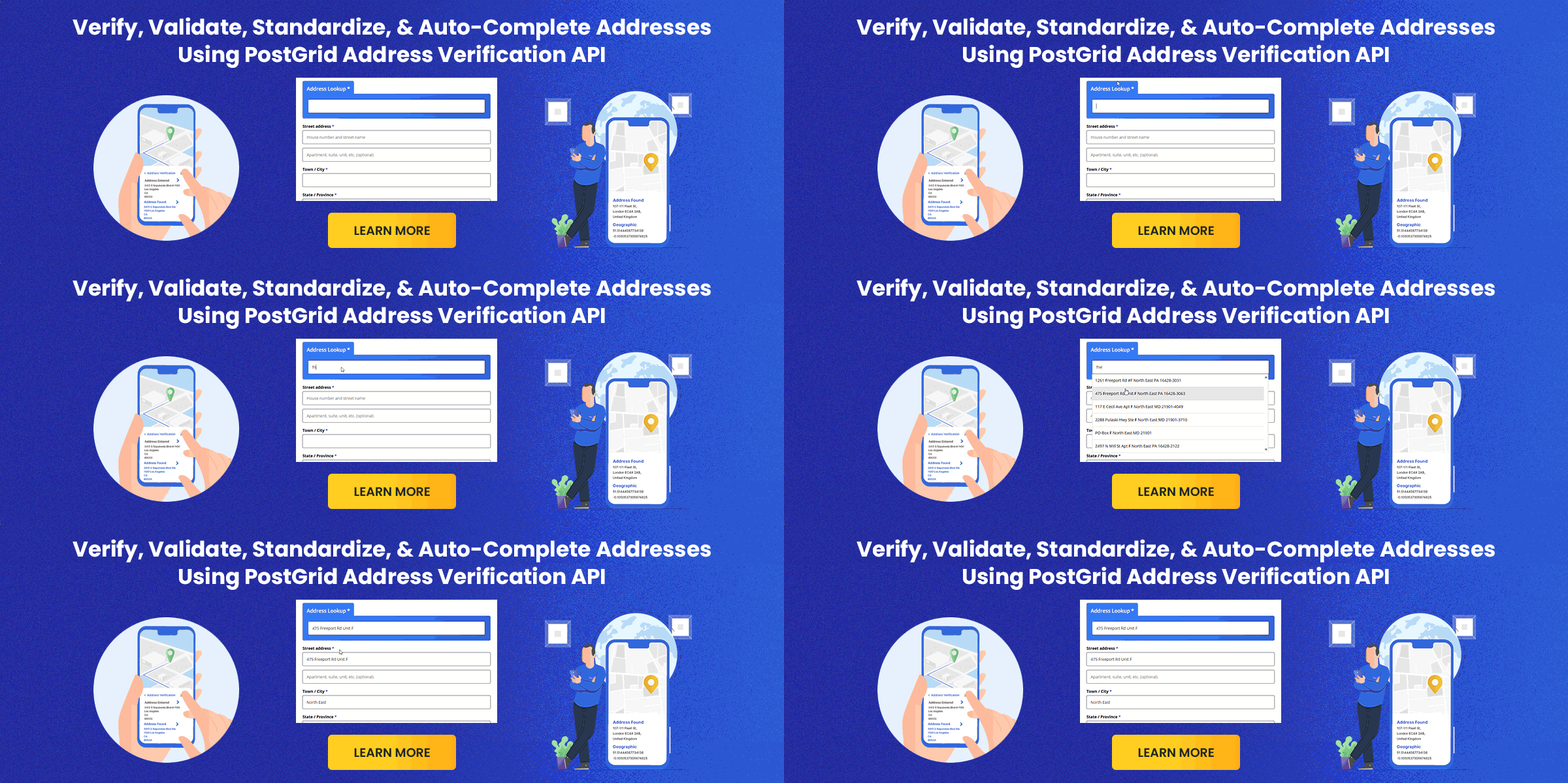
When customers receive their shipments without issues, they appreciate the experience. Real-time address verification tools play a key role in gathering accurate customer information to keep up with delivery promises without failed deliveries. Besides, embedding autocomplete capabilities into checkout forms further increases convenience and lowers the error rate. It provides typeahead suggestions and autofills address fields from the selected suggestion.
Superior Location Intelligence
A postal address can have more use cases than deliveries or identity verification. When you combine addresses with geographic information, you fetch valuable insights. Businesses often use this data for delivery-zone calculations, route planning, service-area analysis, territory management, etc.
Fraud Prevention
Every business should take critical steps to spot fabricated or unusual addresses to prevent fraudulent activities. These addresses can pose significant financial and security risks to your business. For this reason, you should implement real-time address verification systems to identify addresses that cannot be matched with the official postal databases. It can also save you from scenarios where scammers use different combinations of address elements to fool onboarding systems.
💡Also Read: Address Checker
Key Techniques Behind Real-Time Address Verification
Coding Accuracy Support System (CASS) Certification
The CASS certification is a USPS program that ensures an address verification software meets its standards of accuracy and efficiency. It means a certified software can match, sort, and correct addresses by relying on the official USPS database.
It is a vital consideration to reduce undeliverable mail and packages. Above all, real-time address verification tools will help you standardize, match, and correct postal addresses, conforming to USPS guidelines.
NCOA Corrections
You cannot maintain an accurate database if you forget to periodically update your records. The reality is that databases degrade fast as people move and change their addresses. A reliable real-time address verification tool lets you access the USPS NCOALink database to update your mailing lists.
A business can process move updates later on, even after capturing an accurate address in the first place. So, there are no headaches of data entry checks and ongoing database maintenance with address autocomplete.
Geocoding and Reverse Geocoding
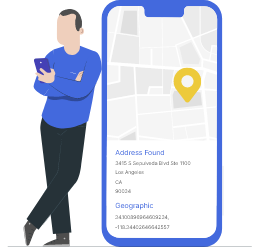
Geocoding data adds another dimension of information to postal addresses. It converts them into longitude and latitude coordinates. So, businesses could run location-based services and data analysis. Reverse geocoding is the exact opposite of this process. It converts geographic coordinates into physical addresses.
Geocoding offers an additional layer in the address validation process. It confirms that an address actually corresponds to a valid location. After all, businesses need this information to detect fraudulent addresses.
Fuzzy Matching and Phonetic Algorithms
These smart algorithms find addresses that are similar, which is necessary for autocomplete capabilities. A real-time address verification tool uses them to manage typos, abbreviations, and variations in address formatting. They work by comparing the pronunciation of address components, then help the users to identify matches. So, they could make the right choice even if they make typographical mistakes.
Data Enrichment
Some real-time address verification tools also use third-party sources to provide accuracy and offer additional insights. For example, you can gather demographic, census, or ZIP+4 information for address enrichment. These insights help you better understand new developments, street name changes, and postal code updates.
💡Also Read: Buying an Address Verification Solution
The Architecture Behind Real-Time Address Verification
API Endpoint
The RESTful API is responsible for receiving data from the client application. This application could be anything from a website, mobile application, ecommerce platform, or an internal system.
Data Preprocessing
Before referencing the input against an official database, the system might clean and interpret the incoming data. It can include steps like removing unnecessary spaces, converting free-form addresses into structured components, or identifying the country/region.
Verification Engine
The actual address validation begins by cross-checking the input against the USPS postal database. This process does the central matching and decision-making work. Besides, it might also include geocoding and fuzzy matching to give enhanced results faster.
Response Format
The system returns a structured response to the application depending on the address requirements. So, the outcome could be verified, corrected, or failed. Some real-time address verification tools even provide suggested alternatives and confidence or match information. Then, businesses could decide whether to accept the address automatically or switch to manual review.
Error and Exception Handling
A reliable address verification system should always leave scope for exceptions. There could be temporary service outages, malformed requests, ambiguous addresses, or even unsupported regions. The software must be able to differentiate between a failed verification and a verification request.
💡Also Read: Address verification API
How Does a Real-Time Address Verification Lifecycle Work?
Connect the Software
Connect the API/software to an existing website, mobile application, CRM, or internal system. It will empower your forms to have autocomplete capabilities.
User Input
The user starts typing into the address collection form. They only have to provide the initial partial elements to get started.
Data Parsing
The application quickly sends a request to the API to start parsing. This means the software has to break down free-form addresses into individual components for better structure and readability.
Correct & Standardize
The address verification solution then might fix common spelling mistakes, abbreviation errors, and formatting of address data to the official postal standards. So, you’ll always end up with standardized and consistent formats in your database.
Address Verification
The final address verification check takes place by cross-referencing against the official USPS address database. You will also get an idea of whether the address is residential or commercial by using the USPS Residential Delivery Indicator (RDI).
Output Results
Lastly, the same form receives the validated address, which is autopopulated across the different address fields. Thus, you ensure an accurate address while the user saves time by avoiding manual data entry.
💡Also Read: International Address Verification
Best Industry Use Cases of Real-Time Address Verification
Ecommerce
Online retailers can implement real-time address autocomplete solutions in their checkout experiences. It allows customers to select the intended address with minimal typing, quickly. At the same time, ecommerce stores ensure there are fewer failed deliveries, delays, and reshipping expenses.
Banking and Fintech Onboarding
Banks and financial institutions should implement real-time address verification to smooth their account opening, communications, and risk control operations. It helps you capture accurate, standardized, and up-to-date customer information necessary to comply with regulations.
Insurance
Insurance companies and agents need accurate address data for policy administration, claims, customer communications, and location-based analytics. Real-time address verification could be a vital part of their everyday workflows to capture and use location data.
Logistics and Shipping
Postal addresses are an operational necessity for logistics companies. They demand highly accurate addresses and location data to manage drivers, delivery schedules, routing, and shipment costs.
Geocoding data from a real-time address verification system could be highly useful for routing and location-based workflows.
Why Should You Consider PostGrid’s Address Autocomplete API for Real-Time Verification Capabilities?
Traditional address verification methods often rely on manual data entry and inconsistent checks. Your business cannot afford to close its eyes and let bad address data compromise operations. For this reason, real-time address verification is a necessity for modern businesses.
PostGrid’s Address Autocomplete API is the perfect solution to verify, cleanse, standardize, and geocode postal addresses in real time. It offers typeahead suggestions as the user starts typing to minimize data entry friction and typos. As a result, you become more proactive by preventing problems at the start instead of fixing them later.
The API supports US, Canadian, and international addresses to help businesses manage customers, orders, or operations across the world.
Sign up now to integrate real-time address verification into your workflows.