
Compliance-First Print and Mail Services for Mortgage Communications
Direct mail is extremely valuable in lending and financial services. In fact, mortgage companies use direct mail to connect with their clients and acquire new borrowers. Lenders use print and mail services for mortgage communications because they get a trackable delivery timeline. This delivery record protects mortgage lenders from legal and financial penalties.
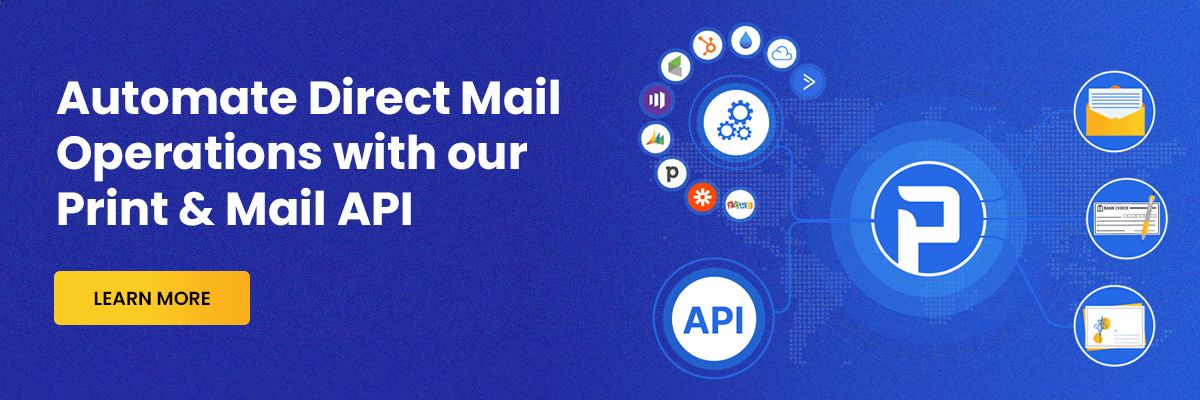
Also, automated mortgage mail services like PostGrid allow companies to print thousands of letters with a single API command. The software offers dynamic personalization that removes manual printing errors. It also eases operational overload for staff members and ensures a smooth communication flow. In this blog, let’s explore how mortgage companies can use physical mail automation to ensure compliance and efficiency.
TL;DR
- Sending loan servicing communications via direct mail is key to financial transparency.
- Print and mail services for mortgage correspondence must adhere to frameworks like SOC 2 TYPE 2, GLBA, and GDPR.
- Trigger-based workflows and end-to-end tracking mechanisms help mortgage companies to scale their operations.
Key Takeaways
- Using direct mail for mortgage correspondence helps build trust and improves customer satisfaction.
- Automated mortgage mail services reduce compliance risks, manual overhead, and enhance productivity.
- Consistent and compliant mortgage mailing processes reduce missed payments and protect the financial health of clients.
- Mortgage customer communications include monthly payment reminders, escrow letters, welcome kits, and adverse action notices.

Why Do Mortgage Companies Rely on Print and Mail Services for Critical Communication?
Mortgage print and mail services bypass overcrowded digital spaces. Borrowers can't miss them because mail arrives right at their door. Direct mail services allow mortgage companies to send sensitive letters through a regulated and compliant workflow. This way, companies can also provide financial transparency. They can keep their clients informed regarding policy updates and changes in loan provisions.
Here’s why mortgage print and mail services are still relevant:
Security and Compliance
Mortgage companies in the U.S. are heavily regulated by state laws and federal authorities, including the Consumer Financial Protection Bureau (CFPB). These agencies protect consumers from predatory lending practices. They also ensure fair and equal access to credit for all consumers. They also mandate how information should be delivered to clients to avoid data leaks or unauthorized disclosures.
For instance, state laws explicitly state that adverse action notices and foreclosure warnings must be delivered via Certified Mail. So, mortgage companies are bound by law to adhere to them. Additionally, lenders who fail to comply with these regulations face penalties and legal action.
Cross-Generational Appeal
Direct mail is considered valuable and appreciated by all age groups. In fact, a USPS generational research report found that 96% of baby boomers engaged with promotional mail sent by locally owned businesses. Meanwhile, 72% of Gen Z stated that they are excited to open their physical mail daily. This proves that direct mail marketing is still relevant despite the widespread use of email marketing.
Another benefit of using print and mail services for mortgage letters is their longevity. Letters and postcards are memorable because clients can constantly see them around their homes. In fact, many companies personalize these mailers to boost customer retention. They also add QR codes to bridge the gap between physical mail and websites.
Fraud and Cybersecurity Risks
The mortgage industry is vulnerable to data breaches, fraud, and digital spam. Companies must guard against these risks to protect sensitive client data. They do so by monitoring vendor practices and ensuring data encryption.
Furthermore, lenders can switch to secure print and mail services for mortgage communications for time-sensitive letters. They use highly secure automated direct mail software because it guarantees tamper-proof security and maintains a clear audit trail for critical documents.
Easy Accessibility and Inclusion
Some potential homeowners and clients don’t use the internet as frequently as others. By relying solely on digital notifications, mortgage companies risk alienating them. So, to ensure seamless communication and build trust, companies can use mortgage mailing services to send critical notices to digitally inactive members.
With regular, compliant mortgage mailings, companies can also reduce missed payments. In fact, targeted mortgage reminders notify borrowers about upcoming interest payments and due dates. This helps avoid late fees or delinquency and protects their credit history.
💡Also Read: Mortgage Direct Mail Marketing Mailers
Types of Mortgage Correspondence Handled by Print and Mail Services
Companies use print and mail services for mortgage correspondence, namely: transactional, regulatory, and marketing. These mortgage communications build trust between lenders and borrowers. This is important for borrower transparency regarding financial and legal obligations.
Transactional Mortgage Correspondence
These mortgage customer communications are mandatory notices about specific individual borrowers. Lenders send them throughout the loan lifecycle. These loan servicing communications contain highly sensitive financial data that require precise tracking and compliant workflows.
- Application Confirmations: These letters are sent to inform applicants about the approval and status of their loan application.
- Monthly Mortgage Statements: Updates about monthly due payments, interest rates, principal breakdown, escrow balances, and payment history.
- Annual Escrow Statements: These contain detailed yearly summaries of property tax, insurance payments, and any surplus.
- ARM Adjustment Notices: Lenders use these to tell borrowers about upcoming changes to their loan, such as a new interest rate or monthly payment.
- Year-End Tax Statements (Form 1098): These are mandatory IRS forms that report specific payments made by the borrower throughout the year.
Regulatory and Compliance Notices
Mortgage communications are heavily regulated because they hold sensitive financial and personal data. By law, companies must protect consumers' information. They must also keep clients informed about big changes to their loans.
- Loan Estimates & Closing Disclosures: These documents contain essential details regarding the terms, costs, and closing fees of a loan.
- Adverse Action Notices: By law, this must be issued if an applicant’s loan application has been denied or modified unfavorably.
- Servicing Transfer Notices: These letters are mailed to inform borrowers if their loan is being transferred to a new service provider.
- Right to Rescind Notices: These outline the borrower’s right to cancel a refinance loan within three business days of application.
- Privacy Notices: These provide provisions for annual or initial disclosures that explain how the financial institution protects, uses, and preserves consumer data.
- Delinquency Letters: These are warning letters informing borrowers about missed or unpaid taxes, fees, or loan installments.
- Loss Mitigation Letters: These notices contain terms like loan forbearance, loan modification, short sale, or a deed in place of foreclosure.
Mortgage Marketing Mailers
Mortgage companies often launch direct mail campaigns to acquire new customers and retain existing borrowers. These marketing mailers help generate interest in loan products and services. They also drive sales and growth.
- Welcome Kits: Onboarding kits and self-mailers are sent to new borrowers to help them understand the process.
- Finance Offers: Postcards to market different loan options and terms to potential clients so they can buy their dream homes.
- Marketing Postcards: Personalized and well-designed sent out to local neighborhoods to explain the benefits of owning a home vs renting.
- First-Time Homebuyer Brochures: Target qualified leads to help them visualize the mortgage process without feeling overwhelmed.
💡Also Read: Mortgage and Loan Pre-Approval Letter Templates
Compliance Standards Your Mortgage Mail Service Provider Must Meet
Mortgage companies cannot use an ordinary commercial print vendor. They require a compliant print and mail service for mortgage correspondence. This is because every letter contains Personally Identifiable Information (PII) and vulnerable financial data. By law, letters containing PII must be securely transmitted to avoid unapproved exposure and identity theft. So, when selecting a provider, you must ensure they hold the following certifications:
- SOC 2 TYPE 2: This is an independent reporting framework that audits third-party service providers on how they secure client data. The American Institute of Certified Public Accountants (AICPA) established it. Before selecting a print and mail partner, you must ensure that they are SOC 2 TYPE 2 audited.
- End-to-End Encryption: Bank-grade security frameworks ensure that borrower data is safeguarded from cyberattacks. Encryption makes data unreadable, so that it stays safe while it travels through different servers. Companies do this through security protocols like secure SFTP tunnels or HTTPS APIs. Data at rest also stays protected using AES 256 encryption.
- GLBA (Gramm-Leach-Bliley Act) Compliance: GLBA is a federal law that requires financial institutions to build robust administrative, technical, and physical security infrastructure to protect financial data. Also, all financial bodies and partners must provide reports on their information-sharing practices to consumers.
- Physical Facility Security: To prevent data leaks at printing facilities, print and mail services for mortgage correspondence must ensure a secure physical setup. These facilities must have restricted access and video surveillance must monitor them. They must also follow secure shredding steps, so no PII is left unguarded or unattended.
💡Also Read: Mortage Commitment Letter
How Mortgage Document Automation Reduces Cost and Compliance Risk
By choosing automated print and mail services for mortgage documents, companies can reduce overhead, compliance risk, and manual errors. Here is how:
Trigger-Based Automation
Instead of manually pulling data to print and mail notices, companies can set up specific triggers within their CRMs. They can establish rules to automatically trigger relevant letters and postcards. For instance, they can automate adverse action notices whenever a property loan is denied. Likewise, payment reminders can be scheduled in advance so that clients do not miss important due dates.
Proof of Mailing and Audit Trails
Certain notices, such as adverse action notices and foreclosure letters, must be sent via First-Class Mail or Certified Mail by law. Companies must schedule these in advance to avoid disputes and legal hassles. Automated print and mail services for mortgage communications can easily accommodate this requirement. They offer essential documents like mailing and return receipts. You also get real-time tracking data and an irrefutable per-piece digital archive.
Managing Bulk Mailings Without Manual Dependency
Overworked staff members often fail to keep up with the high-volume demands. Mortgage correspondence is continuous and repetitive. For instance, lenders send out payment reminders monthly. Escrow letters are annual in nature. Handling all this demand at scale takes automation. It allows companies to easily grow from 5,000 letters to 10,000 without added costs. It also boosts output, because staff members are not occupied with non-essential tasks.
💡Also Read: Direct Mail in Mortgage Communication
How PostGrid Powers Mortgage Document Automation for Financial Institutions
Mortgage companies that rely on manual physical mailings are bound to miss critical deadlines and make costly manual errors. Companies are also more exposed to data leaks, which can lead to additional penalties and affect their credibility in the industry.
To establish a secure and smooth mailing operation, mortgage lenders can use PostGrid. It is one of the best print and mail services for mortgage communications because it ensures regulatory compliance, accuracy, data security, and documented tracking logs. Here’s a detailed overview of PostGrid features that enhance deliverability and reduce vulnerabilities:
API-First Mortgage Document Delivery
PostGrid offers a developer-friendly API that allows financial institutions to automatically design, print, and mail letters individually or in bulk. By integrating Print & Mail solutions with their preferred CRMs, they can eliminate risky manual data extractions. Its functionality enables them to send letters as easily as emails from their own systems without ever visiting a post office.
Built-In Address Verification for Higher Deliverability
Incorrect or outdated mailing data can cause delivery delays and expose lenders to compliance risks. For instance, by accidentally sending an adverse notice to an outdated address, you are exposing your client’s information to a third person. This is cause for penalties. To prevent such incidents, PostGrid embeds CASS-certified Address Verification functionality into its workflow. With it, companies can easily validate and standardize mailing data against USPS postal records. It also improves the quality of your internal address databases by updating them using the NCOA link.
Compliance-Ready Infrastructure for Regulated Correspondence
With PostGrid, mortgage companies can send confidential and compliant mailings without fear. This is because it adheres to strict regulatory frameworks like SOC 2 TYPE 2 and provides end-to-end encryption for data transfers. It also maintains data protection controls that align with GLBA and GDPR requirements. Additionally, PostGrid collaborates with authorized print vendors that work with a secure physical infrastructure.
Real-Time Tracking Across Every Mortgage Statement Mailing
Traditional mail has two major flaws: zero real-time tracking and unpredictable delivery. To fix this structural error, PostGrid provides end-to-end tracking for every mortgage statement mailing letter. Companies can easily track every letter in real-time through the dashboard. Lenders and internal teams can access detailed delivery logs for compliance audits. They can also opt for special services for mailing and delivery receipts. Additionally, companies can combine mortgage statement mailing with QR codes.
Sign up now to streamline your print and mail operations for critical communications.