
How to Use Insurance Quote Address Autocomplete APIs to Boost Efficiency
You are trying to offer a quick, accurate insurance quote to a potential customer, but you are confused by their address. It has typos, missing details, and incorrect information. This will slow down the quoting process. The customer might leave your service out of frustration. It will also affect your profitability.
This is why we recommend using an address autocomplete insurance solution. It will clean up the pesky address mistakes and help you deliver quotes faster than ever before. In this blog, we will walk you through the impact of address inaccuracy and how an autocomplete solution can reduce the time it takes to create an insurance quote.
Key Takeaways
- Address inaccuracies like missing information or spelling mistakes requires manual intervention and verification. It delays the insurance quoting process.
- Delays in quoting can cause potential customers to abandon their inquiry. They will turn to competitors who can provide faster quotes.
- The address autocomplete API minimizes keystrokes by providing suggestions as the user types. It speeds up the form completion process.
- Cross-referencing the address with authoritative postal records ensures accurate, complete address entries from the start.
- Accurate and verified address data speeds up the insurer’s ability to assess risk and quickly provide an accurate quote with the appropriate premium.
How Does Address Inaccuracy Impact Insurance Time to Quote?
Increased Manual Intervention
When users enter an address in the web form that is incomplete or incorrect, the system will not generate an accurate quote until the agent rectifies the mistake. It will require the insurance agency to take additional steps, such as verifying the address with the customer and cross-checking postal databases. The agent will have to enter corrected data into the system manually. It will delay the entire quoting process, leading to longer waiting times and negatively affecting customer experience.
Slower Response to Competitive Offers
Inaccuracies like a partial address or typos will cause the insurer to miss out on providing an accurate quote promptly. Customers expect a quick response, and if the quote is not delivered fast enough, they will take their business elsewhere. As per Businesswire, 65% of consumers have cut ties with a brand over a single poor customer service experience. Since they're comparing multiple offers, any delay will lead to loss of trust, and the insurer will end up losing a significant market share.
Delayed Underwriting and Policy Issuance
Insurance underwriting relies heavily on complete and accurate address information. An inaccurate or incomplete address can cause issues in assessing risks. Insurers might misidentify a property’s location relative to high-risk areas like flood zones or fire-prone regions.
Lack of a verified address will hinder risk evaluation and creation of accurate insurance quotes. It will demand manual intervention, which will delay the policy issuance process. It will also lead to mispricing, negatively impacting both the insurer’s and the customer’s interests.
💡Also Read: Solutions for Insurance Industry
What Is an Address Autocomplete API, and How Does it Help in Timely Insurance Quoting?
The address autocomplete API is a solution that provides real-time suggestions. It integrates with the system to automatically offer address suggestions based on partial input, reducing errors. It speeds up form completion and improves the accuracy of data.
💡Also Read: Insurance Marketing Strategies and Ideas 2025
How Does it Ensure Prompt Insurance Quoting?
Faster Data Entry
As the customers type the first few characters, the autocomplete API displays a list of possible full address suggestions in real-time. The reduced keystrokes decrease the time spent on manually entering every detail. It is beneficial when insurers collect large amounts of customer information. The quicker form completion makes the quoting process efficient, leading to increased conversion rates.
Mitigate Errors and Typos
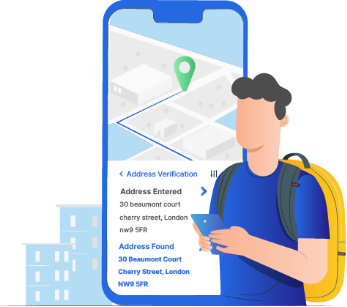
It cross-references the details against the verified postal address databases, such as USPS. It flags and corrects inaccuracies such as incorrect zip codes, misspellings, etc. The accurate data entry from the beginning reduces the need to follow up and speeds up quote creation.
Optimizes Risk Assessment
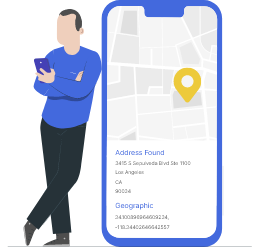
Autocomplete APIs, like the one offered by the PostGrid Address Verification solution, provide geocoding information. The latitudes and longitudes help the insurers get a precise location for better mapping of risk factors. They can assess the environmental hazards and neighborhood crime rates. It will help them quickly create accurate quotes with premiums that reflect the actual risk exposure. The precise and verified details will reduce the time spent on corrections and back-and-forth with the user.
💡Also Read: State of Direct Mail Marketing in Insurance 2025
What Are Some Tips for Effectively Using Address Autocomplete APIs in Insurance Quoting?
Automatically Populate Address Field to Reduce Typing Efforts
Once the users select their address from the suggestions, the autocomplete API should auto-fill the other fields, such as city, state, and ZIP code. Since they don't have to enter every detail manually, the autocomplete improves user experience. Additionally, it will minimize the chances of common errors and lead to fast insurance quoting.
Provide Users With Address Confirmation Options
This additional step will provide a safety net, ensuring users can verify that the correct address is selected. It is especially beneficial in cases where autocomplete suggestions are similar. It will reduce the chance of errors going unnoticed, which could otherwise delay the quoting or underwriting process.
Implement Address Autocomplete APIs Across All Quoting Touchpoints
Alongside the insurance quoting page, integrate the APIs in associated forms like claims, customer information updates, etc. It will ensure reductions in address-related errors throughout the entire customer journey and provide a consistent user experience. It will also reduce the time spent correcting address information later in the process, such as during policy renewals or claims submissions.
💡Also Read: Address Autocomplete Insurance Conversion Rate
Get Real-Time Autocomplete Suggestions With PostGrid’s Address Verification Solution
As a part of our comprehensive Address Verification solution, PostGrid offers a real-time autocomplete API. We offer type-ahead search capabilities and the ability to cross-reference official postal records like USPS and NCOA. It ensures your customers only enter verified, accurate, and complete details. We also provide details down to the secondary unit designators, like the ZIP+4 code and building number, to help you with risk assessment and creating insurance quotes quickly. To see our solution in action, request a demo now.