
Navigating Address Data Legalities: A Guide to Privacy Law and Personal Data Protection
Think about your company's most valuable asset: its customer data. Now, zoom in on a single piece of that puzzle: the mailing address.
While this seems like simple information, just a street name, city, and ZIP code, it's actually at the center of a complex legal storm. If you’re using customer addresses to send direct mail or verify identities, you are navigating a tricky landscape. And this is where address data legalities and compliance mandates come into the picture.
The stakes are incredibly high. Misuse or accidental exposure of address data can trigger massive fines, legal battles, and a devastating loss of customer trust. On the contrary, managing it with compliance allows you to unlock powerful, measurable communication channels, like direct mail, with confidence.
This guide is your essential roadmap. We'll break down the what, why, and how of address data legalities, explaining the rules, and why they matter to your business. Most importantly, we will discuss how you can remain compliant in your offline communications. As a result, you can achieve the same precision and security as your digital operations. Keep reading to protect your business, power your growth, and learn address data legalities.
Key Takeaways
- A physical address is legally defined as Personally Identifiable Information (PII) under all major global privacy laws.
- Laws require your legal requirements address data to be accurate and current for compliance. Use Address Validation tools to meet this legal duty and prevent errors.
- The address must only be used for the specific reason you stated at collection time. Any new use requires separate, clear consent (e.g., for marketing).
- Protect data with encryption when stored or sent, and restrict employee access using Role-Based Access Control (RBAC).
- Any vendor handling your addresses must be secure (SOC-2 Type II). Enforce this security with a binding Data Processing Agreement (DPA)

What Are Address Data Legalities?
Address data legalities are just a set of rules. They control how your business handles customer addresses. A physical address is considered PII. This means the data is sensitive.
When you link an address to a name, you know where a person lives. This is why the information needs strong protection. Legal requirements address data governs how you must collect, store, use, and protect addresses.
What is Address Data Under the Law?
Legally speaking, address data has a broad definition. Address data legalities include any data linked to a specific person and their location.
This covers the physical address itself. It means the street name and the postal code. It can also include things like geocode data. Geocode data is precise location coordinates. It is often created from the street address. Because you can track a person, major address data legalities apply.
The Key Legal Principles
Europe's General Data Protection Regulation (GDPR) and California's California Consumer Privacy Act/California Privacy Rights Act (CCPA/CPRA), establish strict principles for handling address data:
- Lawful Use and Honesty: You need a legal reason to use an address. Also, you must clearly tell the customer how you will use their data.
- Limited Purpose: You must only use the address for its original reason. For example, you collected it for shipping. You can’t then send marketing mail. That needs a separate permission.
- Data Only When Needed: Only collect the smallest amount of data necessary. Collecting too much is non-compliant.
- Accuracy: All your address data must be correct. Therefore, you must keep it updated. Address verification helps achieve this compliance. It ensures all your records are exact.
- Security: You must keep the data safe from all threats. It includes unauthorized access and theft. Consequently, you must use strong encryption and access limits.
💡Also Read: Physical Address Definition and Use
Why Are Legal Requirements Around Address Data Important?
Protecting Customer Trust and Privacy
A home address is very personal information. When customers share it, they expect you to protect it.
- It Prevents Harm: These laws prevent addresses from being misused. Misuse can lead to identity theft. It can also lead to fraud or harassment.
- It Protects Rights: The rules give people control over their data. They can request to see or delete their address. Following these rules shows you respect your customers. This builds long-term trust in your brand.
Shielding Your Business from Risk
- Avoid Huge Fines: Laws like GDPR have severe financial penalties. Violations can cost millions of dollars. These fines can easily destroy a business.
- Prevent Legal Battles: Customers can sue your company. They may file lawsuits for privacy violations. Defending yourself takes lots of time and money.
- Maintain Your Reputation: A data breach is public knowledge. If customer addresses are exposed, your business looks careless. This loss of reputation can be hard to recover.
Ensuring Accurate Communication
- Better Direct Mail: You save money on physical mailings. This is because fewer pieces of mail bounce back.
- Smarter Operations: Correct addresses are vital for shipping products. They also support quick identity checks. It ensures smoother, more efficient operations.
- Compliance Tools Help: Using tools for address validation helps compliance. These tools keep your records clean and correct. Ultimately, this enables you to scale your offline communication with precision.
Address data legalities, therefore, are not a barrier. They are an infrastructure. They let you connect with customers safely and effectively.
💡Also Read: Address Exception Handling for Accurate Mail Delivery
How to Stay Compliant With Address Data Regulations?
Staying compliant is an ongoing process for any modern business. You must focus on three core areas. These are collection rules, protection methods, and data management.
Set Rules for Data Collection
Start with your collection practices. Only gather the data you actually need.
- Practise Data Minimization: Only collect the minimum address data required. For instance, only get the complete street address if you must ship a product. Do not ask for more information “just in case.”
- Obtain Clear Consent: You must tell customers what you will do with their data. Get their explicit permission to use their address. This is called informed consent.
- Be Totally Transparent: Provide a clear and easy-to-read Privacy Policy. This document should explain your data handling process. It must also detail their right to access or delete their address.
Implement Strong Security
You must treat customer addresses like sensitive data. Protect it from all unauthorized access.
- Encrypt Address Data: Use encryption to hide the address information. Encrypt data when it is stored or when you send it to a partner. Encryption protects data even if it is stolen.
- Limit Who Can See It: Use strict access controls in your systems. Only employees who absolutely need an address can see it. Access should be based only on their job duties.
- Train Your Employees: Staff training is key to avoiding human error. Everyone must know the correct way to handle address data. They must also know what to do if a breach happens.
Manage Data for Accuracy
Address data must be accurate for both business and legal reasons. Inaccurate data is non-compliant.
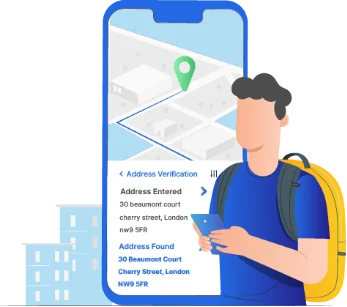
- Use Address Verification: Employ a tool to check addresses in real-time. Address verification confirms an address is real and correctly formatted. This maintains your required level of accuracy.
- Create a Data Map: Know exactly where every address is stored in your company. You must track where it goes and who uses it. This is important for audits and deletion requests.
- Set a Retention Plan: Do not keep address data forever. Once the original purpose is done, delete it safely. A data retention policy tells you how long to keep the data.
💡Also Read: India Address Format With Examples
Understanding Address Validation Compliance
Address validation compliance is crucial. It is the process of checking an address against official postal records. This ensures the address is real and deliverable.
Accuracy is a Legal Mandate
Many address data legalities require that data be kept accurate. Laws like GDPR state that data must be accurate and current. An invalid address is not accurate data. Using validation helps you meet this legal duty.
Validating an address is also a security step. It helps confirm a customer's actual location. This makes it harder for criminals to use fake addresses for fraud. This strengthens your overall security compliance.
How Validation Supports Compliance
Validation is a tool that helps you follow the law in key areas. You only keep the correct, standardized version of the address. This supports the principle of data minimization.
If a customer asks you to delete their data, you must find it all. You can easily find and delete the data if it is clean and validated. Validation makes handling consumer requests easier. Also, it cleans up addresses into a consistent format. This means all your systems have the same, correct record. Standardized records are easier to secure and audit.
Choosing a Compliant Validation Tool
The validation tool itself must follow the same rules you do. Make sure the validation provider encrypts your data. They must have strong security protocols in place. This protects data while it is being processed.
If the vendor is handling your customer data, you need an agreement. This contract is called a DPA. The DPA ensures the vendor follows all privacy laws. Using a compliant validation service turns a complex task into a simple one. It actively helps you maintain address data legalities.
💡Also Read: Postal Address Example and Format in 2026
Key Considerations of Data Privacy and Address Data
A physical address comes under PII and must be treated with the highest level of care under all privacy laws.
- Address is a Direct Identifier: Laws like GDPR and CCPA explicitly define the address as “Personal Data” because it can directly identify an individual or household. It carries a high risk of re-identification if breached.
- Principle of Transparency: You must be completely transparent about why you are collecting the address (e.g., “for shipping only”) in a clear, easy-to-understand privacy notice.
- Purpose Limitation is Strict: The address must only be used for the specific, legitimate purpose you stated during collection. Using a shipping address for a later marketing campaign typically requires separate, explicit consent.
- Data Minimization Practice: Only collect the address components strictly necessary for the purpose. If a ZIP code is sufficient for your analytical needs, avoid collecting the full street address.
- Security is Paramount: Address data must be protected by robust measures. Implement encryption for the data both when it's being stored (at rest) and when it's being sent (in transit).
- Restrict Access: Use RBAC to ensure that only a few key employees who need the full address to do their job have access to it.
- Manage Retention: You must establish a clear retention schedule and securely delete or anonymize the address once the purpose is fulfilled. For example, after the legally required record-keeping time has passed.
💡Also Read: Address Data Governance Frameworks
Regional Differences in Address Data Laws
European Union (GDPR) – The “Opt-In” Standard
GDPR sets the global benchmark for strict data protection.
- Legal Basis Requirement: Processing an address (including collection, storage, and validation) must be justified by a “lawful basis.“ This is typically the necessity for fulfilling a contract (e.g., shipping a product).
- Affirmative Consent: For non-essential uses of the address (like sharing it with a marketing partner), the standard is explicit, unambiguous opt-in consent. Implied consent is insufficient.
- Data Transfer Restrictions: Transferring an EU resident's address outside the EU/EEA (e.g., to a server in the US) is strictly controlled. This requires specific safeguards like Standard Contractual Clauses (SCCs) to ensure the data is protected to EU standards even when abroad.
- Right to Erasure: The right to have address data deleted is extensive, though there are exceptions (e.g., legal record-keeping).
California (CCPA/CPRA) – The “Opt-Out” Standard
This act, amended by the CPRA, focuses heavily on consumer control over data privacy address legal sharing and selling.
- Right to Opt-Out: Businesses must allow California residents to easily opt out of the “sale” or “sharing” of their personal information, including their address. This is often done via a “Do Not Sell or Share My Personal Information” link.
- No Explicit Legal Basis: Unlike GDPR, CCPA/CPRA doesn't require a specific “legal basis” for processing. The focus is on notice and choice. You can collect the address, but you must tell the consumer you're doing so.
- Household Definition: CCPA/CPRA uniquely extends privacy rights to information that can identify a “household,” making the address (which identifies a household) a key protected element.
- Limited Extraterritorial Reach: The law applies only to California residents and only to businesses that meet specific revenue or data processing thresholds (e.g., processes information of 100,000+ CA consumers).
Brazil (LGPD) – GDPR-Inspired Hybrid
The Lei Geral de Proteção de Dados Pessoais (LGPD) follows the GDPR model but with a local take.
- Similar Lawful Bases: Like the GDPR, LGPD requires one of ten specific legal bases to process an address, such as legitimate interest or contractual necessity.
- Data Transfer Requirement: LGPD also imposes restrictions on cross-border data transfer. This often requires a similar level of protection to that mandated by the Brazilian authority (ANPD).
- Broad Definition of Data: The definition of personal data is broad and explicitly includes the physical address.
💡Also Read: Address Verification & Validation Pricing
Postgrid: Your Trusted Partner in Address Data Accuracy
Handling address data correctly is paramount because it's PII and protected by laws worldwide. The most fundamental step is address validation: making sure every address is real, deliverable, and accurately formatted. This simple action immediately helps your business meet basic privacy rules like the requirement for data to be correct and current. Accurate addresses also secure your system, prevent fraud, and allow you to quickly honor customer rights. For any global company, using a service that handles this validation precisely is a necessary foundation for legal operation.
To manage these data privacy address legal demands efficiently, a reliable partner like PostGrid is crucial. The company provides certified validation to guarantee accuracy across many countries, which reduces shipping errors and costs. More importantly, its infrastructure is designed for global compliance, and it adheres to GDPR, HIPAA, and SOC-2 Type II security standards. By integrating PostGrid’s real-time tools, your business ensures every address entering your system is immediately verified. All addresses are securely encrypted and logged for auditing, region-specific requirements into a single, straightforward, and compliant data management process.
Ready to comply with address data legalities and streamline address validation? Contact us today!
💡Also Read:What Is Real-Time Address Verification
💡 Also Read: Project US Address Standardization
FAQs
What Counts as Address Data Under Major Privacy Laws?
- Address is PII: A physical address (street, city, ZIP/postal code) is explicitly classified as PII under virtually all major laws, including GDPR, CCPA/CPRA, and LGPD.
- Direct Identifier: It is a direct identifier of an individual or a household (CCPA/CPRA), making it high-risk data.
- Geolocation: Related data, like precise geolocation coordinates derived from the address, is also considered PII. This often requires high protection (CPRA classifies it as sensitive PII).
Do I Need Consent To Collect or Use Mailing Addresses?
It depends on the address data legalities, and the purpose:
- GDPR (Europe): Explicit consent is often not required if you have another “lawful basis”. For example, you can process an address without consent if it is necessary to fulfil a contract. However, using the address for a new, secondary purpose (like marketing) always requires separate, explicit consent.
- CCPA/CPRA (California): Consent is generally not required for collection if you provide proper notice to the consumer. However, you must provide an easy opt-out mechanism if you “sell” or “share” the address data with third parties.
- Best Practice: Always be transparent about the purpose of collection in your privacy notice.
How Should I Store and Protect Address Data Securely?
- Encryption: The data must be protected using strong encryption both when it is stored (at rest) and when it is being transmitted (in transit).
- Access Control (RBAC): Restrict access using Role-Based Access Control (RBAC). Only employees who absolutely need the address to perform their job (e.g., shipping, billing) should be able to view it.
- Validation: Use an address verification tool to maintain accuracy and cleanse your database, which is itself a compliance requirement.
- Vendor Security: Ensure all third-party vendors that handle the address data are also compliant and secured.
What Rights Do Individuals Have Over Address Data?
Individuals hold strong rights over their address data globally:
- Right of Access: The right to ask what specific address data you hold on them.
- Right to Rectification: The right to ask you to correct an inaccurate address record.
- Right to Erasure (Right to Be Forgotten): The right to ask you to delete their address data (with some exceptions for legal/financial record-keeping).
- Right to Object/Opt-Out: The right to stop you from processing their data (GDPR) or to stop you from selling/sharing their data (CCPA/CPRA).
How Do I Handle Data Sharing With Third Parties (Vendors, Partners)?
- DPA: You must execute a legally binding contract, known as a DPA (or similar agreement), with every third party that processes address data on your behalf.
- Mandate Protection: The DPA legally obligates the vendor (the Processor) to maintain the same security and compliance standards (GDPR, CCPA) that you are held to.
- Transparency: Your privacy notice must explicitly list the categories of third parties with whom you share address data and why (e.g., “shared with shipping carriers for order delivery”).
What Is the Minimum Retention Period for Address Data?
There is no universal minimum retention period.
- Purpose Limitation: Address data should only be kept for as long as it is strictly necessary for the purpose it was collected (e.g., completing the order).
- Legal Exceptions: You must retain addresses only for specific, legally mandated periods, such as tax records, warranty claims, or proof of delivery.
- Policy & Disposal: Create and enforce a clear Data Retention Policy that specifies deletion or anonymization procedures once the purpose and legal hold period expires.
How Can I Demonstrate Compliance (Documentation, Audits, DPIAs)?
- Record of Processing Activities (RoPA): Under GDPR, you must maintain records detailing what address data you collect, why, where it is stored, and who it is shared with.
- Data Protection Impact Assessments (DPIAs): Conduct DPIAs for any new project that involves high-risk processing of addresses. For example, merging large address databases or using AI to profile customers based on location.
- Audits & Certifications: Regularly audit internal data handling processes and use CASS-certified or SOC 2 Type II certified vendors to show due diligence and security.
What Are Common Penalties for Address Data Violations?
Address data legalities have penalties that are severe and are typically calculated based on annual global revenue, not just local revenue.
- GDPR: Can result in fines up to €20 million or 4% of annual global turnover, whichever is higher.
- CCPA/CPRA: Includes fines for intentional violations (up to $7,500 per violation) and can result in consumer lawsuits following a data breach.
- Reputational Damage: Beyond monetary fines, violations lead to significant loss of customer trust and public criticism, often doing more damage than the financial penalty itself.