

What Are The Best Types Of Printing To Use For Your Business?
A digital-first company may find it weird that companies are still using printed marketing materials for their marketing efforts. Yet the list of companies that rely on them is long. And it has some of the biggest brands in the world. Suppose you are among the people considering print marketing for your business. In that case, you probably want to know the printing processes.

Understanding the types of printing you can use for business marketing and communication efforts is a non-negotiable to ensure successful print implementation. You don't become a sailor without learning to swim first. Even if you did, there is always the risk of drowning.
Similarly, you risk drowning in excessive expenses if you don't understand the different types of printing processes. Hence, we list the primary printing methods you can use for your business and their characteristics. After reading this article, you can determine the best printing methods for your business organization.
What Are The Different Types Of Printing?
Printing is not something new to us. Our printing history dates back centuries and as far back as 220 AD. But enough talk about the past. We have come a long way since the first woodcut type printing. The types of printing we have today are significantly more advanced than people in the old days could even imagine.
Today, we have digital printing, web-to-print technology, and other advanced printing tech, each offering its advantages. The printing industry has become so huge that the different types of printing have niche branches today.
But first, let's take a look at the main 5 methods of printing that exist today, which are as follows:
- Offset Lithography
- Flexography
- Digital Printing
- Large Format
- Screen Printing
#1 Offset Lithography
Offset lithography involves printing on rough surfaces like wood, cloth, and canvas. However, it is a flexible printing method you can use on books, paper, etc. Also called litho or offset printing, it is one of the more popular types of printing you are likely familiar with already.
It is an excellent choice for the mass production of printed materials. Hence, it is arguably the best among the 5 types of printing for producing marketing materials like postcards, brochures, etc. The printing process involves using printing plates with an image of the content. This plate used in offset printing typically uses aluminum material.
During the printing process, the plates are “offset” or transferred on rollers. This offsetting happens before printing or inputting the print media, which could be any paper. Companies often prefer offset printing because it is one of the cost-effective types of printing.
The unique thing about this type of printing is that the print media or paper never comes in contact with the metal plates. As a result, the plate's life is significantly longer than the other types of printing processes available today.
That's not all. Offset printing produces high-quality images ideal for trim and bulk printing. Furthermore, compared to the other 5 methods of printing, it offers versatile printing capabilities. In other words, you can print on both smooth and rough surfaces using this method.
#2 Flexography
Flexography is another popular printing choice among the 5 types of printing we discuss here. It is often the printing choice for packaging and labels. But you can use this printing method for practically anything with a continuous pattern, like wallpaper or gift wrapping paper.
In a way, Flexography is nothing but a modern and hyped-up version of the old letterpress printing. It stands out from the other 5 methods of printing because of its quick-drying ink which is semi-liquid. And since the prints dry faster, they are perfect for quick and bulk printing.
Unlike the metal plates in offset printing, here we use printing plates made of flexible photopolymers. The printing plates have rotating cylinders wrapped around them. The process uses a web press and spins at high speed. Additionally, types of printing like Flexography use slightly raised images.
But what makes Flexography popular among the other 5 types of printing is its flexibility to print on various media. We mean print media, including cellophane, plastic, and metallic films.
#3 Digital Printing
A list of the types of printing processes is incomplete without digital printing. As you may already know, digital printing is synonymous with signage and posters. It is also ideal for printing marketing materials like labels and newsletters. Additionally, people also use it for printing menus of all kinds.
Compared to the rest of the 5 types of printing, digital printing offers a more modern approach. It uses several modern printing technologies, including inkjet and laser printing. Here, the images or content is sent directly to the printer via, you guessed it, digital files.
For example, it could be a PDF or JPEG file, and you can directly print it with digital printing. As you can guess, there is no need for a printing plate or any other piece of equipment in digital printing. It saves you time and money compared to the different types of printing we discussed above. For businesses dealing with various image formats, using SoftOrbits HEIC to JPG converter software ensures that all digital assets are compatible with standard printing requirements.
Another advantage of digital printing is that it facilitates a fast turnaround time which is ideal for business organizations. Additionally, it also helps in printing on-demand requirements. However, it may not be suitable for bulk printing requirements compared to some of the other types of printing processes.
#4 Large Format Printing
Large-format printing is one of the 5 types of printing that several business organizations use. As the name implies, large-format printing involves printing materials having a maximum or large width for your print rolls. You can use this painting type to produce large signage for your business, including billboards, vinyl banners, large posters, etc.
Besides this, you can use similar types of printing to produce murals, wallpapers, floor graphics, and even laminating. As you can see, this printing method is perfect for printing more traditional marketing or print advertising materials. One of the most significant advantages of using such printed materials is the spacious area for creative freedom.
Despite being an old advertising method, it still manages to make a significant impact on the target audience. Additionally, other types of printing, like digital printing, can't even begin to compete with large-format printing in terms of the printing area. It is worth noting that large-format printing enables you to print marketing content onto rolls and not individual sheets.
Hence, it is best to print large print media such as billboards and murals. No matter how hard you try with the other 5 methods of printing, you can't produce materials that compete with large-format printing. However, if you are trying it for the first time, you should note that you must either hang or make the printed material stand freely.
#5 Screen Printing
The last among the 5 methods of printing that we discuss here today is screen printing. Screen printing is ideal for producing promotional materials like T-shirts. Many businesses and individuals choose to make custom shirts for marketing purposes, company uniforms, or special events due to the versatility and durability of screen printing. Although this printing method is last on the list, it is not any less significant. It is the perfect printing method to print your brand's logos and graphics onto clothes, making it ideal for producing promotional materials like T-shirts.
But promotional materials like T-shirts are not the only scope for screen printing. You can use screen printing or similar types of printing for fabric banners and posters.
The printing process uses fine materials or meshes to transfer elements, images, or content to the print material. You can use this printing process to print on paper or metal surfaces.
However, in most practical cases, screen printing prints images or graphics onto clothes or other fabrics. While it offers several advantages for printing promotional and advertising materials, it also has disadvantages. For instance, compared to the different 5 types of printing, screen printing is relatively complex to set up.
Hence, it is best for your bulk printing needs. Additionally, screen printing is not the most cost-effective among the 5 methods discussed here. Unless, of course, you are printing in bulk, in which case screen printing is highly cost-effective.
What Are The Best Types Of Postcard Printing Methods?
It is no secret that postcards are one of the best and most cost-effective printed materials for marketing your business. It is cheap to produce, even in bulk. You can get even more discounts from USPS for bulk mailing and presorted postcards. But more importantly, it creates an emotional impact on the recipient. Hence, it is worth learning the types of postcard printing methods you can use.Some of you might need more concrete data to back up our claim about the effectiveness of postcard marketing. Well, according to the data released by the DMA, 50.9% of recipients agree that postcards are helpful to them. That's not all. DMA also found that 52.5% of people read the postcards they receive. Now, you are probably wondering which are the best types of postcard printing methods you can use. As an expert in direct mail, we advise you to go for automated printing.
Automated Print and Mail Solutions
The most efficient types of postcard printing are the ones with zero error. And the only way to achieve this is through automation. Let's face it, no matter how good a process you have, it is impossible to ensure a zero-error process where there is manual involvement.
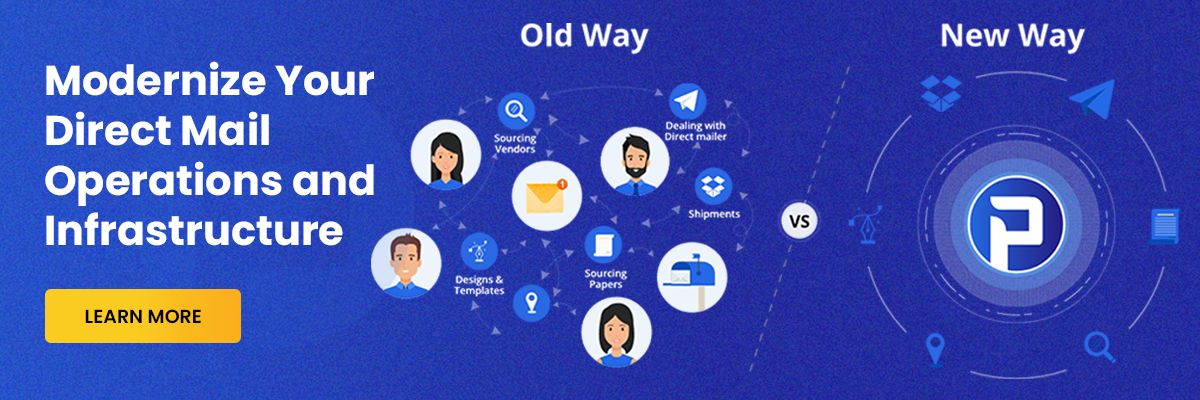
PostGrid offers you fully automated types of printing processes through an advanced print and mail API. And the best part is that ensuring a zero-error process is just a tiny part of what PostGrid can do for your business. Integrating PostGrid's REST API can easily integrate its print and mail system into your website.
What does it mean for the types of printing you use for your marketing and communication purposes? It allows you to produce fully personalized printed materials with the click of a button, including your bulk mail campaigns. And we are not talking about just postcards. You can automate printing everything from direct mail marketing materials to invoices using PostGrid.
 Also Read: Business Card Size Specifications Also Read: What is Plastics and Printing?
Conclusion
There are different types of printing methods available with advanced capabilities today. These methods allow you to create quality marketing materials to help you grow your business. However, the best printing method is one where you don't have to do any work.
With PostGrid, you get a fully automated print and mail API that does all the work, minus the errors. Automated printing is one of the best types of printing you can get for your business. It allows you to do innovative work without compromising the quality of the print.
Hence, businesses should invest in print and mail solutions like PostGrid to streamline marketing and communication efforts. By doing so, you don't have to worry about things like the best types of printing processes. Why? Because automated systems like PostGrid take care of it for you.