
What Are P.O. Box-Only ZIP Codes in the USPS Mailing System?
USPS employs an unconventional type of ZIP code called the P.O. Box-Only ZIP code. These ZIP codes only contain P.O. Box addresses. Since postal mail delivery is impossible for certain U.S. addresses, these are specific areas where people receive postal mail through P.O. Boxes alone.
Usually, each ZIP code has a “classification” indicator. USPS classifies these exclusive areas under the “P” ZIP code type category. It makes it incredibly easy for USPS to filter out addresses that only accept PO Box Mail. The postal service maintains a complete record of these addresses in its official database.

nother category, “S” stands for “standard”. Most addresses fall under this category, where physical delivery is available. The next category, “M,” is for “military addresses. They are American by nationality, not locality, because these might be temporary locations or located on foreign land.
The last classification of ZIP codes is “U,” which stands for “unique.” These ZIP codes are assigned to organizations or institutions that receive a large amount of mail regularly. Hence, they are given a unique ZIP code dedicated to their specific address.
In this blog, we are going to learn about the category “P,” which is for P.O. Box-Only ZIP codes.” We will see when they are used, their limitations, use cases, and more. Let us begin!
TL;DR
- There are four types of ZIP codes, which include standard, unique, miliary, and P.O. Box-Only ZIP codes.
- P.O. Box-Only ZIP codes are allocated to places that don’t accept street-level or doorstep deliveries.
- There are several limitations to using P.O. Box-Only ZIP codes, like paying to rent the P.O. Box and package size restrictions.
- You need an Address Verification solution to classify, validate, and standardize addresses with P.O. Box-Only ZIP codes.
Key Takeaways
- P.O. Box-Only ZIP codes are dedicated codes for addresses where mail is undeliverable.
- People from these areas can only receive their mail through P.O. Boxes.
- USPS implements a ZIP Code type classification system to improve its delivery services.
- USPS maintains an official address database with information on every ZIP code and classification.
- Businesses should consider using address verification tools to deliver mail to P.O. Box-Only ZIP codes.
What Are ZIP Codes and ZIP+4 Codes?
ZIP codes play a crucial role in ensuring your postal mail is processed efficiently without any delays or bottlenecks. They enable postal services like USPS to identify and sort postal mail sent to a destination easily. Not having ZIP codes in your postal mail could cause potential delays. The postal mail sent without a ZIP code on it may be required to be handled manually, causing unnecessary delays that could have been avoided if you had provided the ZIP codes.
💡Also Read: Gabon Address Verification
Most of us are already familiar with ZIP codes and ZIP+4 codes, and at the very least, we’ve heard about them even though you may not know how the ZIP codes work. The ZIP+4 codes give the USPS a more pinpointed location of the delivery address, allowing them to make more efficient deliveries.
However, there is more than one type of ZIP code the USPS uses. The PO Box-Only ZIP code is one of the unconventional types of ZIP codes employed by USPS.
This article discusses what PO Box-Only ZIP codes are, what their uses are, the classification of ZIP codes, and the importance of getting your hands on accurate data.
 Also Read: ZIP Code Validation

What are PO Box-Only ZIP Codes?
Sometimes mailbox mail delivery is not possible for certain addresses but they may still require access to the postal services. This is where the PO Box-Only ZIP codes come into the picture. They are used for addresses that do not have a mailbox for delivering the mails. In other words, the PO Box-Only ZIP codes contain addresses that only have a PO Box address.
There are whole areas where the postal mails are received through PO Boxes alone. In fact, each ZIP code actually comes with a “classification” indicator, and the areas that are served exclusively via PO Boxes are classified as “P.” This makes it easy for the USPS to filter out addresses that do not deliver mail to physical addresses.
One of the things that you must love about USPS is that they keep an impeccable set of records of just about everything. Hence it is no wonder that they keep a recorded list of ZIP codes that the USPS does not deliver to the physical addresses. This list of addresses are the same ones that are classified as “P,” and they are clubbed together under a special ZIP code that we call the PO Box-Only ZIP code.
Also Read: PO Box vs. Street AddressClassification of ZIP-Codes
We are familiar with the regular address we use for our homes and even workplaces. From the point of view of USPS, a regular address is one that has a physical location at which their mails can be received.
For example, suppose your office is at, let’s say, “Stark Tower” and live downtown, but you often switch addresses when buying office supplies depending on your convenience.
Here the postal mail can be received at both of the physical addresses – your office as well as your home.
In this case, both the addresses are deliverable by the USPS, and they are clubbed together under the same category the USPS calls “S,” which stands for “Standard.” This is typically where all addresses that are physically deliverable by the USPS fall under.
The second category of addresses is those that are American when considered nationally but not if you consider it by the locality.
This category usually refers to military addresses. This could include ships that are stationary or military installations installed on foreign soil. This kind of address is classified as “M” by the USPS, which, as you may have guessed, stands for “Military.” These addresses are deliverable by the USPS, but their delivery system is more similar to international shipping.
Then again, there are also addresses that are truly unique in every aspect. They include companies, organizations, and institutions that regularly receive a large number of postal mails. These addresses are often given their own ZIP codes but what’s truly interesting is how they are classified by the USPS. Addresses like companies, organizations, and institutions with their ZIP code are classified as “U,” which stands for “Unique.”
The final classification of ZIP codes is reserved for PO Boxes.
The addresses that can not receive their mails directly from their doorsteps/mailbox or, more accurately, from their physical addresses receive the “P” classification. You can even call it a PO Box. Every ZIP code zip code list, if you may. Every ZIP code, including home and business locations that the USPS doesn’t provide their service to, is classified under this section.
Types of ZIP Codes in the U.S.
Standard ZIP Codes
This first category refers to the addresses that receive mail at a specific physical location in the country. For example, any standard residential or commercial address receiving its shipments at the front door meets this qualification. USPS assigns an “S” classification to this address. The “S” stands for “Standard.”
Military ZIP Codes
These addresses are American by nationality but not by locality. U.S. Military locations could be anywhere worldwide, from ships to embassies to army bases. Many of these addresses aren’t stationary like a standard address. Their location can change anytime, and it is often highly classified. USPS assigns the letter “M” for military classification. It means that these addresses are reachable by the USPS but require additional methods and delivery systems similar to international shipping.
Unique ZIP Codes
According to the USPS, these ZIP codes are assigned to businesses, governmental agencies, universities, or buildings that receive a considerable amount of high-volume mail. USPS uses the letter “U” to classify these “Unique” ZIP codes.
P.O. Box-Only ZIP Codes
These ZIP codes are assigned only to areas served by PO Boxes. Regular mail is undeliverable or inaccessible in these areas. USPS assigns a “P” classification to these addresses where they can’t provide service to individual home and business locations.
Here’s an example: The ZIP code 22313 serves all the P.O. Box addresses in Alexandria City County, Virginia. It is a P.O. Box-Only ZIP code and does not have any individual delivery points.
What Is the Difference Between ZIP Codes and P.O. Boxes?
ZIP Codes
A ZIP or Zone Improvement Plan code refers to a series of numbers assigned to a specific geographic location in the United States. The country’s official mailing service, the United States Postal Service (USPS), uses these codes to identify and deliver mail items to particular areas. These codes usually have five digits but can have four additional digits for more precise location intelligence.
P.O. Box
A P.O. Box, also known as a Post Office box, is a dedicated mailbox at a post office. Individuals or businesses can receive mail and packages in their P.O. Box, which has a unique box number and needs a specific mailing address format.
Key Differences Between ZIP Codes and P.O. Boxes
- ZIP codes are helpful for geographic mail routing and don’t represent any physical mailbox or address.
- P.O. Boxes are physical mailboxes at a post office where mail is kept for pickup or forwarding. Most P.O. boxes are used for business purposes or as an alternative to a street address for mail pickup and delivery.
Importance of Using P.O. Box-Only ZIP Codes
Security and Privacy
P.O. Boxes give you a private and secure method of receiving mail without disclosing your physical address. They also protect you from theft, damage, or unauthorized access to mail items.
Reliability
A P.O. Box address safeguards against the uncertainties of street delivery, such as incorrect addresses or missing mailboxes. The mail items are kept safe at the post office until the recipient collects them manually or requests a digital scan.
Consistency
A P.O. Box provides a consistent mailing address for individuals or businesses that move frequently. Senders can send mail continuously to the P.O. Box, irrespective of changes in the physical address.
Accessibility
Recipients can pick up their mail items from their P.O. Boxes at their convenience during post office working hours. It is difficult for individuals and businesses to be present at their physical address when receiving mail.
💡Also Read: Patient Statements Services
Use Cases of P.O. Box-Only ZIP Codes
Businesses
Many businesses rely on P.O. Boxes to maintain a professional image and keep their physical location private. They are also ideal solutions for companies that operate from multiple locations or need a stable mailing address to receive their mail.
Individuals
People living in remote areas of our country often can’t access mailing services, and some want to keep their physical addresses private. Travelers and expatriates also need P.O. Boxes to ensure the secure delivery of mail.
Government Agencies and Institutions
Many government agencies, educational institutions, and other organizations rely on P.O. Boxes for official correspondence and administrative tasks.
Limitations of P.O. Box-Only ZIP Codes
USPS Supported Only
You might only be able to send mail to P.O. Box-Only ZIP codes via USPS. Since P.O. Boxes are managed by the postal services, they don’t accept deliveries from other carriers, including FedEx, UPS, or DHL. Hence, many deliveries might be rejected, delayed, or returned to the sender.
Package Size Restrictions
P.O. Boxes have physical size limits that restrict how large incoming packages can be. Oversized mail items may not fit inside the mailbox. Thus, the post office may hold these packages for manual pickup, which might cause inconvenience to the recipients.
Address Verification Challenges
Some address validation systems may struggle to correctly classify P.O. Box-Only ZIP codes. If your mailing software does not recognize the P.O. Box designation, it may incorrectly treat the address as a standard street location, causing delivery or formatting errors.
Physical Packages
Some incoming courier packages from private courier companies may not be deliverable to postbox addresses. The recipient must communicate with the sender to discuss reliable delivery options. Many individuals and organizations face size limitations in these mailboxes when fitting physical packages.
Limited Availability
P.O. Boxes are often in high demand nationwide, and the availability could be limited in some locations.
Cost
Individuals and businesses must pay recurring fees to own a P.O. box at the post office. This cost varies based on the box size and location.
How to Get Accurate Data on ZIP Codes Using Address Verification
You must know what type of ZIP codes you have on your mailing list before sending something via mail. It helps you ensure high deliverability and low mail return rates. But how can you detect P.O. Box-Only ZIP codes from a mailing list of hundreds or thousands of delivery addresses? Yes, you need a solid Address Verification solution to help you identify, standardize, and validate addresses with P.O. Box-Only ZIP codes.
Importance of Address Verification When Mailing to P.O. Box-Only ZIP Codes
Address verification helps you match your address with the postal authority’s official database. Hence, you can check whether it exists in the USPS records, helping the post office complete the delivery. If not, it is likely that the address is nonexistent, invalid, incomplete, or inaccurate.
For example, imagine you run a retail business with thousands of orders pouring in weekly. Customers place orders on their website, and you promise them delivery in a specific number of days. What happens if you don’t run a check on the mailing list and send all the shipments via FedEx? If some of the addresses have P.O. Box-Only ZIP codes, those shipments will be returned because most P.O. Boxes don’t accept deliveries from other carriers. Thus, it highlights the significance of data mapping and classification using an Address Verification solution before shipping.
The ZIP code data needs to be accurate, and you need a reliable source for this information. Now, if all you want to know is whether a location falls under the “P” classification, it is relatively easy to find, and businesses often prefer knowing if a particular address is a PO Box one or not. Because by the end of the day the effectiveness of your direct mail efforts comes down to where or to whom the mail was delivered. For this, they need to know whether the mail was delivered to their PO Box address or home/office address.
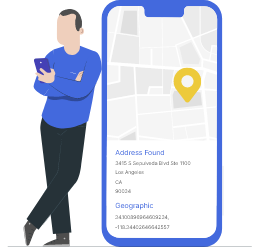
Luckily most advanced address verification tools such as PostGrid come equipped with the capability to find out an address’s full ZIP code. Tools like PostGrid even allow you to bulk verify addresses with a simple CSV file. Furthermore, the address autocomplete API from PostGrid can even detect the PO Box addresses in your address database and provide you with a BOX ID, which makes it abundantly clear whether an address is a regular one or a PO Box one.
Also Read: Does UPS Deliver to PO BoxesConclusion
The PO Box-Only Zip codes are reserved for addresses or locations that do not have a physical address to receive their mails. Businesses often determine the effectiveness of their business operation based on the deliverability of their direct mails. Therefore, it becomes essential for businesses to determine whether an address is a regular one or a PO Box one for various reasons. Advanced address verification tools like PostGrid can verify your address database, and its superior API can even tell whether an address is a PO Box address and help businesses optimize their operations.
Also Read: Can Certified Mail Be Sent to a PO BoxHow PostGrid Helps Businesses Mail Reliably to P.O. Box-Only ZIP Codes
For businesses sending mail at scale, P.O. Box-Only ZIP Codes introduce operational complexity that goes beyond simple address validation. The challenge is not just identifying whether an address is a P.O. Box; it is designing a mailing workflow that adapts to USPS delivery constraints without breaking business processes. This is where PostGrid adds long-term value.
PostGrid functions as a Print & Mail operations platform rather than a point solution for address checks. It helps businesses structure their mailing systems so that P.O. Box-Only ZIP Codes are handled correctly at every stage of production. When an address is identified as P.O. Box-only, PostGrid can ensure that mail pieces are formatted properly, routed through compatible USPS services, and excluded from carriers that do not support P.O. Box delivery. This prevents failed deliveries, returned mail, and unnecessary carrier costs.
Sign up now to learn more about how PostGrid can streamline mailings for your business!
FAQS
Can UPS Deliver to a P.O. Box-Only ZIP Code?
No, P.O. Boxes only accept mail and packages delivered by the USPS. However, some P.O. Boxes do accept deliveries from other carriers if the recipient has opted for special services. Having said that, it is best to use USPS to ship to P.O. Box-Only ZIP codes to avoid potential delays and returns.
Are P.O. Box-Only ZIP Codes Common?
No, P.O. Box-Only ZIP codes aren’t common because the majority of the ZIP codes in the U.S. come under the “S” type category, which stands for standard addresses. P.O. Box-Only ZIP codes are only assigned to localities where street-level deliveries are not possible or challenging for the USPS.
How Do You Detect a P.O. Box-Only ZIP Code?
You can check if a ZIP code only serves P.O. Boxes by checking the USPS type classification. If it is under “P,” it is a P.O. Box-Only ZIP code. Modern address validation tools can automatically detect this classification as they directly search through the official postal records for such information.