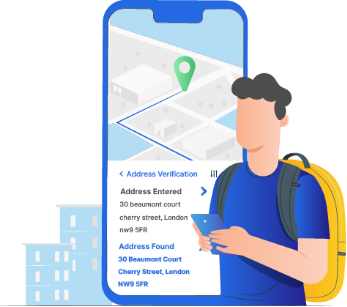

Maps Address Verification vs Address Validation API: What Works Best
Imagine sending a critical delivery. You search for the address on Google Maps. The map shows a location, making you assume the address is real. It is a huge and costly mistake. Standard maps address verification is not actually a verification process. Google Maps and others are designed for navigation. They are not built for official address validation. Hence, businesses lose money every single day.
Did you know that 76% of respondents in a survey said that decision-making driven by accurate data is their top goal for data programs? Yet, 67% of these respondents don’t trust their internal data completely. Thus, it impacts the business’s customer experience and operations. Companies must stop relying on Google Maps address verification. Hence, they need specialized tools. This guide will show you how real address validation works. You will learn why map apps are great for navigation but terrible for delivery accuracy. Let us begin!
Key Takeaways
- Standard map applications provide a mappable location (a guess) but do not perform accurate maps address verification.
- Geocoding locates an address on a map. Address validation confirms the address is real and deliverable by a postal service.
- The Google Maps platform offers a separate Address Validation API. It must be used instead of the standard Google Maps service for business data accuracy.
- Incorrect address data costs businesses billions in wasted shipping, resources, and poor customer feedback.
- High-level verification requires Delivery Point Validation (DPV) to ensure the specific delivery points, including unit numbers, are correct and exist.
Core Concept: Mappable Location vs Valid Address
Many people use Google Maps daily. They use it for driving. Or they use it to find a store. The map application is a navigation tool. It is not an address validation tool that could help businesses. Hence, a location you see on a map is simply a guess. It is a calculated point. Firms that want to find addresses of their customers or other stakeholders for decision-making or delivering orders cannot rely on maps.
Mappable Location: The Geocoding Process
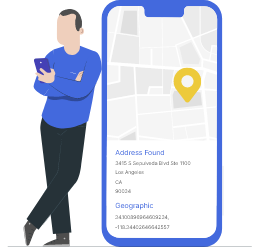
When you type an input into Google Maps, you are using geocoding. Geocoding is the process of converting a written address into a coordinate. It gives you a latitude and longitude. Thus, the map plots this coordinate point. Map APIs often use street ranges. They know that a street starts at address number 1. They know it ends at address number 100.
If you search for address 50, the map places the pin in the middle. It happens even if address 50 does not exist. The system simply interpolates the location. Consequently, if you search for an incorrect address, the map will still show you where it would be. This is why relying on maps address verification is dangerous. It gives you false hope.
Waze Maps address verification and Bing Maps address verification work the same way. They show proximity but do not confirm existence. They are helpful for navigation but not for official delivery guarantees.
Valid Address: True Verification
A valid address is entirely different. To validate an address means to verify it against a primary postal dataset. In the U.S., this means the USPS. Similarly, other nations use their respective official postal services. Proper address validation confirms two things. First, the street, city, state, and ZIP component must be correct. Second, a physical mail-receiving structure must exist at that location. The postal provider must recognize this structure.
Therefore, an actual maps address verification system confirms the delivery is possible. It does not just show you a map pin. It gives you the complete accuracy of the location. Hence, for any business sending mail or packages, proper address validation is required. The process involves a detailed electronic match. It guarantees the mail carrier can complete the request.
💡Also Read: Physical Address Definition and Use
The Modern Landscape: Google Maps and the API Difference
For years, companies struggled with Google Maps address verification. They tried to force the wrong tool to do the right job. The standard Google Maps platform offers a robust suite of APIs. However, these tools were mainly designed for navigation, location search, and showing Points of Interest (POIs). They were not designed for high-stakes delivery accuracy.
The Limitations of Standard Geocoding APIs
If you use the standard Google Maps geocoding APIs, you get a geocode. This geocode is a coordinate. Thus, you know the approximate location. The process does not include real-time checks against postal data. The map might show that the street is real. But it will not verify that the house number is real. Hence, you may send mail to a vacant lot.
Apple Maps address verification and other standard map functions share this key limitation. They use mapping, but they lack the postal dataset for formal address validation.
💡Also Read: Pakistan address verification
The Business Impact: Why Quality Data Matters
The Cost of Failed Delivery
Think about your delivery costs. A single failed shipment costs money. You pay for the initial shipping fee. The shipping provider then charges you a return fee. This is often called a Non-Deliverable-As-Addressed (NDA) fee. Hence, one bad address costs you double the shipping.
In addition, your employees must spend so much time updating the customer record. They must arrange for a second shipment. This entire process is avoidable with proper address validation. Proper maps address verification acts as a preventative firewall. Consequently, the initial small request for an address validation API call saves huge amounts of money later. It stops the expensive cycle of return and re-shipment.
Customer Experience and Brand Trust
Your customer wants one thing: to receive their package on time. An incorrect address leads to delays. It leads to frustration. The customer often leaves negative feedback, harming your reputation. Therefore, poor maps address verification directly impacts brand trust. A customer who has a bad experience may never return.
In contrast, when a business uses an advanced tool, the system can provide instant feedback to the user during checkout. As the user types their address, the system can instantly suggest the correct format. It makes the user experience smooth. Also, it prevents typos. The address validation process becomes part of good service. It shows the customer that you care about their delivery. This leads to a higher accuracy rate for all shipments.
Beyond Ecommerce: Risk and Compliance
Many industries rely on precise address data. Insurance companies use it for risk coding. They need to know if a house is in a flood zone. Banks use it for Know Your Customer (KYC) compliance. They must verify the user is who they say they are. Thus, the need for accurate address validation goes far beyond simple package delivery. The accuracy of the location determines the premium or the loan approval. Hence, precise maps address verification is a critical tool for financial and legal compliance. You need a trusted dataset to ensure that your records are entirely correct. Furthermore, this kind of data is used for government reporting and census update processes.
💡Also Read: Address Verification & Validation Pricing
Deep Dive: Levels of Address Quality
Level 1: Standardization
At this basic level, the process involves taking the messy input and cleaning it. It converts the address into the correct postal format. For example, “avenue” becomes “AVE.” This is called standardization. Waze Maps address verification and Apple Maps address verification do not offer such advanced features.
Level 2: Delivery Point Validation (DPV)
DPV is the gold standard for delivery. It confirms that an address is not just possible but actual. The postal provider confirms that a specific site receives mail. DPV checks for a particular 11-digit code assigned to the mailbox. Hence, a DPV check can verify if the building number exists. It can also check the secondary component, like an apartment or unit number. Thus, a service using DPV provides accurate maps address verification. It ensures that your package will be delivered on the first request.
Level 3: Rooftop Geocoding
Geocoding has degrees of accuracy. Street-level coding puts the pin on the street itself. However, rooftop geocoding is ultra-precise. It provides a coordinate that lands directly on the roof of the specific structure. This level of accuracy is vital for specialized needs. For example, emergency services use it to pinpoint a location instantly. Insurance companies use it for detailed risk assessment. Consequently, when you need to verify the exact building footprint, you need rooftop geocoding. This is a powerful feature that goes far beyond what simple Google Maps address verification offers. It requires sophisticated APIs and comprehensive documentation from the provider.
💡Also Read: Address Exception Handling for Accurate Mail Delivery
How Can Businesses Access Valid Address Data Using PostGrid
You now know the difference. You know that relying on maps address verification alone is a risk. Thus, you need a dedicated provider. You need tools that offer both high-level address validation and precise geocoding. PostGrid offers a complete solution.
PostGrid’s Address Verification API is built for accuracy. Our process handles both U.S. and international address needs. Hence, you can verify any address in over 245 countries and territories.
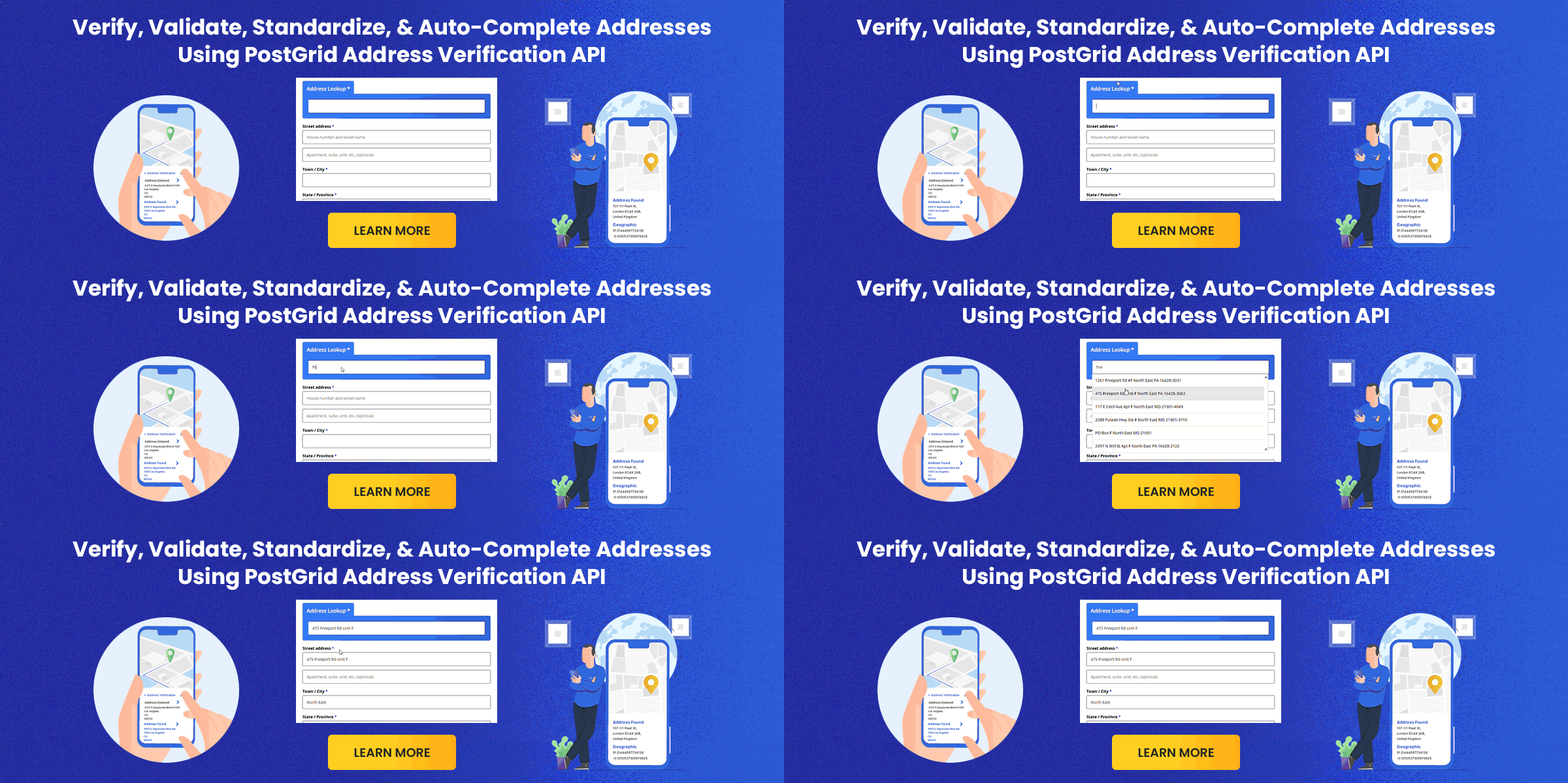
You simply send an input request to our API. We handle the complex process behind the scenes. We perform the DPV check and standardize the address. Also, we return the correct and validated address to you. Moreover, we can provide rooftop geocoding for maximum accuracy. It ensures that every delivery goes to the correct place the first time.
Sign up to learn more about finding and validating deliverable addresses using PostGrid!
FAQs
Does Google Maps Validate Addresses?
Standard Google Maps, including the traditional Geocoding and Places APIs, does not perform official postal address validation. It uses interpolation (geocoding) to estimate where an address would be located on the map. You must use the separate Google Address Validation API for proper validation.
What Is the Most Important Component of Address Validation?
The most crucial component is DPV. It confirms that a mail-receiving structure actually exists at the given street number and verifies any secondary components. They include apartment or unit numbers, making the address deliverable.
Why Can’t I Just Use Apple Maps Address Verification for My Business?
Apple Maps address verification and Bing Maps address verification are focused on navigation and showing the location of a street segment. They lack the necessary access to proprietary postal dataset files and DPV checks required by shipping providers to guarantee delivery.