

Best Marketing Tools in 2026 With AI, Automation, and High Business Impact
The best marketing tools help businesses manage, automate, and improve their advertising and brand awareness efforts. A Gartner report says that only 49% of marketing tools are actively used in an organization.
These tools can include email marketing automation platforms, direct mail tools, CRMs, contact enrichment tools, social media management solutions, and more. Organizations rely on them to reduce costs and save time. Some of these tools have existed for over two decades, while some are relatively new with AI capabilities.
Your business needs more marketing tools to generate leads, retain customers, and maintain a strong brand reputation. However, there are hundreds of such tools available in the market. How to make the right decision for your business? This blog will help you find the best marketing tools for your business in 2026. We have also divided into several categories for easier understanding.
TLDR
- Top marketing tools help businesses manage, automate, and improve their brand awareness efforts.
- A good marketing tool provides necessary automation, scalability, and performance tracking.
- The marketing software can be divided into distinct categories for each specific purpose.
- Artificial intelligence can help businesses gather in-depth customer insights and predict future trends.
- Data-driven personalization helps in building trust, a relevant, and memorable experience among consumers.
Key Takeaways
- The primary advantage of using the best marketing tools is their ability to handle repetitive tasks.
- Integrating AI models into your marketing strategies helps you analyze complex data patterns.
- It is critical for marketing tools to support native integrations with other platforms, so they can synchronize data across systems and enable multi-channel campaigns.
- Physical direct mail is highly preferable to provide higher engagement with its tangibility and memorable experiences.
- Businesses should try to adopt specialized tools to target their exact needs and preferences.

What Are Marketing Automation Tools?
Marketing tools refer to digital programs and resources that help companies to promote their products or services. Marketers and sales professionals use them to implement marketing strategies and track performance. Above all, you can consider it as an instrument that helps you to execute the marketing plans.
There are three primary goals of the best marketing tools. First, they come with automation features to make repetitive tasks easier to handle. Then, a marketing tool also offers scalability, which you might achieve with a limited staff. Lastly, they have tracking mechanisms. So, you can evaluate the impact of your marketing plans.
Types of Popular Marketing Tools
There are different categories of the best marketing tools, each having a distinctive purpose. For example, you might be able to execute a video marketing plan with an analytics tool. For this reason, it’s critical to learn about the purpose and use case of each type.
Marketing Analytics
It focuses on studying consumer and industry data to plan a company’s marketing strategy. These digital tools help you gather and categorize information in real-time. So, it becomes easier to understand customer demographics and preferences. Moreover, some tools even let you monitor a competitor’s business activities.
Direct Mail Automation
Manual direct mail might be ineffective, resource-intensive, and time-consuming compared to digital marketing tools. However, automation technology is upgrading direct mail to enter the new age of custom workflows and customization. So, businesses can partner with a vendor to print and mail marketing materials on demand. Besides, they also connect with other digital tools to enable multi-channel marketing.
Account-Based Marketing
ABM campaigns are popular for aligning marketing, sales, and customer success. They help firms to land and expand high-value accounts with personalized campaigns and nurturing. There are plenty of tools that can help you with email marketing, contact enrichment, and lead-to-account matching.
Landing Pages
Landing pages help businesses to capture leads for a specific marketing campaign. The best marketing tools are effective in building brand awareness, generating leads, and optimizing sales. Besides, they also come with professional templates and graphics designed for multiple industries.
Search Engine Optimization (SEO)
SEO is the lifeblood of your online visibility. Ranking higher on Search Engine Result Pages (SERPs) means using the right keywords, content, and webpage design. Many of the best marketing tools help you find relevant keywords and optimize your webpages. Also, they support you in reviewing your website’s current ranking in the Google search results.
Social Media Marketing
Most brands rely on social media to spread awareness and advertise products or services. However, diverse platforms mean extensive work on social media posts, link sharing, tags research, and commenting on customer replies. For this reason, you need the best marketing tools for social media to easily schedule posts and interact on multiple platforms simultaneously.
Influencer Marketing
These tools are vital to find online celebrities representing a specific community or interest areas. They are amazing when you want to target a specific audience. So, influencer marketing tools help you maintain business relationships with these influencers.
Video Marketing
Companies often use videos to advertise their products on their website or social media profiles. For this, they need a specialized marketing tool that helps in editing the raw footage and makes it more presentable for both desktop and mobile users. Sometimes they also provide post-scheduling, keyword research, and analytics features for different platforms.
Customer Relationship Management
These are the most important marketing tools to build positive relationships with your customer base. CRMs let you review critical customer data, such as personal information and purchase history. Besides, some tools even let you analyze different purchasing trends and segment customers into groups. Running customer loyalty programs and tracking interactions becomes so easy with CRMs.
Email Marketing
Sending marketing emails requires a specialized tool. They are necessary to organize all your email efforts, create new messages, and maintain lists of email addresses. Besides, you can schedule your emails according to a campaign timeline and reply to customer inquiries.
Event Marketing
Many companies rely on event marketing to generate organic leads via online and offline promotional events. So, event marketing tools are also a trend these days. They help you plan conferences, speaker presentations, workshops, tradeshows, seminars, and more.
Some tools also offer the ability to develop registration forms, post ads, and track attendance.
💡 Also Read: Direct Mail Marketing
Best Digital Marketing Tools for 2026 to Grow Your Business
PostGrid Print & Mail API
Type: Direct Mail Automation
G2 Ratings: 5/5
Physical communication is highly tangible and memorable. Postcards, flyers, and letters have next-level engagement that you might not be able to get with digital messages. However, automation is necessary to avoid manual workflows, costly infrastructure, and a lack of tracking with old-school direct mail.
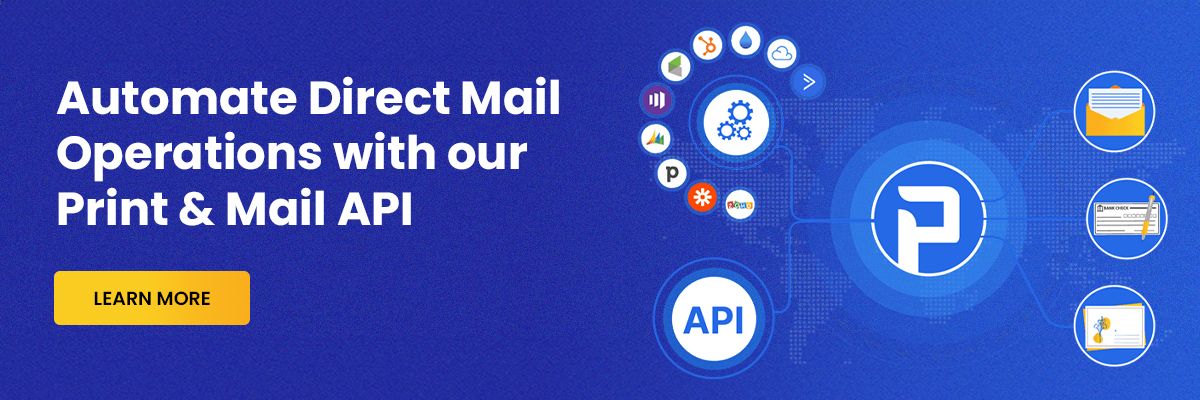
PostGrid’s Print & Mail API is the answer to modern-day direct mail automation. It is a highly scalable solution that helps you send personalized marketing materials on demand. So, there’s no need to buy expensive printers, toner, paper stocks, or postage. Everything is handled from an intuitive online dashboard. Above all, it is as easy as launching an email campaign.
Native integrations are available for CRMs, ERPs, and other marketing automation tools. After all, you can create custom workflows and sync data across systems. Also, run multi-channel campaigns to ensure maximum reach and create additional marketing touchpoints. Overall, the direct mail automation solution makes your marketing campaign more interactive and tangible.
Pros
- Easy-to-use dashboard
- Built-in template customization tools
- Native integrations for custom workflows
- Built-in address verification
Cons
- Not suitable for small-scale businesses
- Strict design guidelines to meet postal rules
Google Analytics
Type: Marketing Analytics
G2 Ratings: 4.5/5
It is a must-have marketing tool for businesses that want a strong online presence. Launched in 2005, Google Analytics is the most popular web analytics service available. Above all, it helps you analyze session duration, pages visited per session, bounce rates, and more. The best part is that the solution is absolutely free. Being one of the best marketing tools, it gives you customizable reports, dashboards, and data collection.
Marketers love Google Analytics as it helps in finding the messages and channels that bring the best results. In fact, you get the best opportunity to understand your target audience better. Overall, it is a fundamental tool to improve online presence and marketing results.
Pros
- Gather critical insights and analytics
- Easy integrations
- Free for standard business needs
Cons
- Steep learning curve
- Technical knowledge might be necessary
- Requires careful setup to ensure data privacy compliance
Hootsuite
Type: Social Media Marketing
G2 Ratings: 4.3/5
Social media platforms are a great way to reach the relevant people and drive sales. However, posting regularly on multiple platforms isn’t everyone’s cup of tea. You need a centralized tool that lets you manage multiple accounts. Hootsuite is an amazing social media management tool that lets you publish/schedule posts, monitor feeds from different accounts, and interact with people.
Integration options are available for other marketing tools to sync data without manual marketing efforts. Besides being one of the best marketing tools, you can also expect basic analytics. The best part is that it's free if you don’t want to access the advanced features. Also, they provide AI-powered post suggestions, campaign scheduling, and engagement tracking. Overall, Hootsuite is a great option for enterprises and agencies managing high-volume social media campaigns. Experts consider it as on the best digital marketing tools for marketing and spreading brand awareness.
Pros
- Scheduling support for almost all social media platforms
- Strong team collaboration and approval workflows
- Unified inbox to monitor interactions
Cons
- High pricing for small businesses or solo users
- Cluttered and dated interface
- Advanced analytics are paid
KWFinder
Type: Search Engine Optimization (SEO)
G2 Ratings: 4.4/5
Content marketing is one of the most important components of a marketing strategy. It means producing relevant and valuable content that people are searching for. However, your team must target the right keywords to expand your content’s reach. KWFinder, as the name suggests, is a great marketing tool to find the most relevant keywords for your brand. Besides, it also provides insights about your competitors, their rankings, and what keywords they are using.
You can create a strong content calendar and generate high-ranking content that drives real traffic. Overall, startups and mid-level businesses love this tool for both short and long-term content strategies.
Pros
- Very intuitive and beginner-friendly interface
- Highly accurate keyword difficulty scores
- An affordable option compared to enterprise tools
Cons
- Smaller keywords and backlink database
- Lack of deep technical SEO auditing features
- Strict daily lookup limits
Surfer SEO
Type: Search Engine Optimization (SEO)
G2 Ratings: 4.8/5
Surfer SEO is one of the most popular marketing tools for content optimization. It helps you build copies worthy of ranking on search engines. In fact, the tool analyzes and scores your content according to its keyword density, length, readability, and other metrics. Altogether, these elements give a decent push to your content on the Search Engine Results Page (SERP).
First, you have to select a domain/niche and your target audience. Then, the system will automatically fetch the most relevant insights by providing you with the top-ranking keywords. Also, you will get suggestions for content outline structure and even image density for your page. There’s a built-in text editor where you can directly work on your writing pieces. Accordingly, you’ll see the SEO score improving in real time.
Pros
- Data-driven, real-time content scoring
- Seamless integrations with Google Docs, WordPress, and more
- Quickly generate comprehensive outlines
Cons
- Sometimes it leads to unnatural keyword stuffing
- Steep pricing for low-volume content creators
- The data volume can be overwhelming for beginners
Claude
Type: Multi-Purpose Tool
G2 Ratings: 4.5/5
Claude AI is one of the most practical applications for marketers available today. The generative AI makes it capable of analyzing data, personalizing campaigns, and supporting your strategies. After all, Claude performs best with real-world data, such as brand guidelines, CRM exports, past campaigns, and customer data.
As one of the best marketing tools, it can be a Swiss Army Knife for marketers. You can process long documents to uncover insights in seconds. In fact, many marketing professionals use it for turning complex numbers and reports into clear recommendations. Use Claude Projects to organize all your context materials and apply the best strategies for your goals. Overall, it can be a useful tool for content creation, email marketing, CRM, data insights, market research, social media, and more.
Pros
- Produces highly natural, human-sounding copies
- Massive context window
- Excellent at complex reasoning
Cons
- Does not have built-in keyword data or SEO scoring
- Might have strict usage limits during high traffic
- Lacks native integrations for CMS
Notion AI
Type: Customer Relationship Management
G2 Ratings: 4.6/5
Notion AI is the latest tool and addition to their productivity platform. The note-taking app has become a personal assistant and project management tool. So, marketers use it for taking notes, brainstorming ideas, summarizing information, filling tables, and more. In fact, Notion cuts down a lot of manual work with automation. However, it is advisable to get a workspace membership to take full advantage of these new capabilities. The AI can handle a lot of tedious tasks, giving you more time to focus on other meaningful things.
Pros
- Zero context switching
- Excellent at summarizing notes and extracting action items
- Highly customizable
Cons
- Lacks specialized analytics for CRMs or marketing platforms
- Cannot natively send emails or publish content
- The AI feature is a paid add-on
Zapier
Type: Customer Relationship Management
G2 Ratings: 4.5/5
When marketers think about process integrations, they use Zapier. It is one of the best marketing tools and AI agent platforms. You can use Zapier to build connections and marketing automation between multiple systems. As a result, it saves time, money, and your energy.
The custom workflows are smart enough to link actions in one system to automate processes in other systems. Besides, data is synchronized in real time across these systems. You can write this automation even without coding, since there are templates to speed things up. Also, it is possible to create branching workflows dependent on the logical criteria you select.
The AI-powered assistant lets you build automated workflows by just describing what you’d like to accomplish. So, your team could create complex, interconnected workflows with efficiency.
Pros
- Connects thousands of apps
- There’s a visual, no-code builder for beginners
- Automates repetitive data entry
Cons
- Multi-step automations can become expensive
- Troubleshooting broken workflows can be frustrating
- It moves data but doesn’t store or analyze it
BrowseAI
Type: Marketing Analytics
G2 Ratings: 4.8/5
Competitor research is a part of almost every marketing strategy. However, you must know how tedious it can be to manually check competitor sites. BrowseAI solves this problem by training bots and automating the filling of data in spreadsheets for you.
For example, you can use this tool to fetch one-star reviews of competitor offerings. Then, analyze the review, spot gaps, and take advantage of them. The bot does the tedious scraping work for you, while you can work on a clean dataset directly.
Pros
- Simple point-and-click interface without coding
- AI automatically adapts to website layout changes
- Connects to Google Sheets and Zapier
Cons
- Credit-based pricing can escalate quickly
- Slow customer support
- May struggle with highly complex, multi-step workflows
Demandbase
Type: Account-Based Marketing
G2 Ratings: 4.4/5
This Account-Based Marketing tool helps B2B marketers to target, engage, and close more deals with their most valuable accounts. Businesses love its account-based advertising, intent data, and artificial intelligence features. You can also create and manage Ideal Customer Profiles (ICP) and Target Account Lists (TAL). In fact, use firmographic, behavioral, technographic, and intent data to segment your audience.
Demandbase also lets you target accounts via personalized ads, content, and web experiences. Besides, the best thing is that you can scale its automation capabilities. Measure performance with account engagement score, pipeline influence, return on ad spend, and revenue impact. Lastly, you can also create custom dashboards within the software.
Pros
- Industry-leading B2B intent data
- Deep integrations with major CRMs and marketing automation platforms.
- Robust account-level advertising
Cons
- Enterprise-level pricing
- Complex setup and implementation
- High-volume data could be overwhelming for new users
ZoomInfo
Type: Account-Based Marketing
G2 Ratings: 4.4/5
If you are looking for B2B intelligence and company contact data, then ZoomInfo could be the best solution. Businesses comparing ZoomInfo with an apollo sales tool often evaluate factors such as database coverage, prospecting workflows, and outreach capabilities before making a decision. It provides bulk contact searches, streamlined list building, and campaign management under one roof. So, you can provide assistance while analyzing customer interactions across multiple channels, such as phone, email, and the business website.
ZoomInfo boasts an extensive database of over 106 million company records. For this reason, you can expect decent coverage of various industries, regions, and job roles. Many marketers use this tool for easy searching, list creation, and data export. Besides, you can also do non-ABM activities, such as lead generation, market research, and sales outreach.
Pros
- One of the largest and most accurate B2B contact databases
- Provides power buyer intent signals
- Integrations for major CRMs
Cons
- Extremely expensive
- Data decay could be a common issue
- Multi-year contracts with aggressive auto-renewal clauses
Salesforce Marketing Cloud
Type: Email Marketing / Customer Relationship Management
G2 Ratings: 4/5
It is suitable for both online and in-person marketing. Many brands with complex products and global audiences love this tool for its built-in ecommerce capabilities and customization features. Besides, you can also expect inventory management and AI-assisted product recommendations. Marketers use Salesforce Marketing Cloud to manage customer communications across multiple channels.
It means handling emails, SMS, mobile push notifications, and social media messages from one platform. Then, automation capabilities are also there to send messages based on customer behavior, preferences, or lifecycle stages. The centralized content library lets you save and manage email templates, landing page designs, web forms, and more. Overall, as one of the best digital marketing tools for your marketing hub, you can optimize campaigns and drive better results.
Pros
- Industry-leading workflow builder
- Massive scalability and deep customization capabilities
- Effortless data synchronization
Cons
- Very steep learning curve
- High enterprise-tier pricing
- The interface might feel dated sometimes
MailChimp
Type: Email Marketing
G2 Ratings: 4.3/5
Mailchimp is a very popular email marketing platform. It is one of the best marketing tools ideal for email and online marketing. Most businesses use MailChimp primarily for sending their newsletters and automated emails. Besides, it lets you build email lists with forms or import your existing contacts.
There are thousands of pre-designed email templates with a drag-and-drop email builder. Then, you can also rely on their built-in email analytics. Overall, it’s a strong option for businesses of any size that want to grow with email marketing. You can try their free plan if your list has fewer than 500 subscribers or 2500 emails a month. This email marketing tool is the perfect recipe for email automation for a business or marketing agency.
Pros
- Very intuitive, drag-and-drop email builder
- Generous entry-level pricing and plans
- Effortless integrations with major e-commerce platforms
Cons
- Pricing scales up aggressively as your list grows
- Automation capabilities are somewhat basic
- Strict compliance rules for certain industries
HubSpot
Type: Customer Relationship Management
G2 Ratings: 4.4/5
Instead of considering it as another CRM, you should think about HubSpot as an all-in-one marketing platform. In fact, it lets you manage everything, including email marketing, social media, content creation, analytics, and even customer service. So, HubSpot could be a unified solution for businesses that don’t like to juggle between multiple tools and keep everything synced.
A centralized approach gives you more control over smoother workflows. There’s automated lead management to help you monitor and nurture leads. Then, you can also customize pipelines to suit your unique sales process. Social media analytics are also available to ensure consistency in campaigns across different channels.
You will love the content creation tools to build landing pages, forms, and emails without coding anything. Lastly, HubSpot analytics give you detailed analytics into your marketing campaign performance. So, you can fine-tune and improve over time.
Pros
- Truly an all-in-one platform
- Extremely user-friendly interface
- Powerful inbound marketing tools
Cons
- Pricing scales up aggressively as your list grows
- Onboarding and implementation could be time-consuming
- Reporting might feel rigid sometimes
Zoho CRM
Type: Customer Relationship Management
G2 Ratings: 4.1/5
Zoho CRM is one of the leading customer relationship management software solutions. Businesses love its ability to optimize sales, marketing, and customer service processes. You get plenty of tools to track leads, manage customer interactions, and automate sales processes.
For customer data, Zoho gives you a complete picture of contacts, leads, and accounts. Then, automation features are present for sales pipelines, tracking deals, sending reminders, and notifications. The sales team can also use the forecasting and reporting capabilities to make informed decisions. Then, there are customer assistance and service tools.
You can track and resolve customer issues with proper support tickets. For email marketing, use Zoho Campaigns to create, send, and track email campaigns. Besides, it has provisions for campaign management, audience segmentation, and analytics.
Pros
- Highly affordable with a generous free tier
- Huge Zoho ecosystem
- Highly customizable
Cons
- Steep learning curve for new users
- The interface might feel a bit cluttered
- Customer support can be slow sometimes
Ahrefs
Type: Search Engine Optimization (SEO)
G2 Ratings: 4.5/5
It is an accurate and versatile tool for SEO and content marketing that you must consider. Ahrefs offers a wide range of tools to monitor, analyze, and optimize your website. Digital marketers love this tool while working with keyword rankings, link data, social media, and more. It also helps you discover the most relevant keywords you should optimize on Google, Amazon, YouTube, and other sites.
Pros
- One of the largest and most active backlink indexes
- Highly accurate keyword difficulty scores
- Comprehensive site audit features
Cons
- Does not offer a free trial
- The credit-based pricing model can quickly drain your usage limit
- Lacks robust built-in AI writing and on-page optimization tools
Moz
Type: Search Engine Optimization (SEO)
G2 Ratings: 4.3/5
Moz also comes in the list of the best marketing tools in 2026. It could be the ideal option to locate technical SEO issues, monitor keyword rankings, and measure your domain authority. Marketing professionals use Moz when they need clear, actionable guidance to improve visibility in SERP.
You’ll understand how people are searching for your business by using this tool. They might be coming from paid ads, organic search, or social media. Moz Pro is a strong choice to track local and national searches. So, your marketing team can get an overall view of your campaign.
Pros
- Best for the industry-standard Domain Authority (DA) metric
- Highly intuitive and beginner-friendly
- Strong local SEO management features
Cons
- Smaller backlink and keyword database
- Lacks some advanced technical SEO features
- Data updates can sometimes lag behind
WordPress
Type: Landing Pages
G2 Ratings: 4.4/5
WordPress continues to be one of the largest and most popular content management systems (CMS) in the world. It could be the perfect choice for building and managing your business website. With a massive library of themes and plugins, the possibilities are endless. Moreover, you don’t even need deep development resources. WordPress provides an easy-to-use dashboard to build and manage your website.
Many businesses use WordPress to build highly dynamic landing pages to capture leads. So, one way it is also a lead generation tool. You also get built-in SEO functionalities. There are amazing tools like the Gutenberg WYSIWYG editor, Rank Math, and Yoast to further improve your SEO efforts.
Pros
- Massive ecosystem of plugins
- Open-source and highly scalable
- Strong foundation for technical SEO
Cons
- Requires regular manual maintenance
- Third-party plugins can sometimes slow down page load speeds
- Might have a steeper learning curve for beginners
Shopify
Type: Landing Pages / Ecommerce
G2 Ratings: 4.4/5
Shopify is your one-stop solution for getting an online store running quickly. Within a few clicks, you can get the bare bones of your store ready. There’s a simple setup process to add products, customize the design, connect your domain, and set up payment options. Besides, the interface is very clean, intuitive, and easy to navigate.
The massive app store within Shopify gives you the freedom to do almost anything. Shopify Magic is their new AI feature that can generate product descriptions for you. Integrations are available to build end-to-end AI-powered workflows.
Pros
- Incredibly easy to set up
- Massive app ecosystem
- Handles all hosting, security, and checkout compliance
Cons
- Transaction fees can eat up your margins
- Need to learn proprietary coding language (Liquid) for deep customization
- Monthly costs can skyrocket if you rely on third-party apps
How Is AI-Powered Marketing Used? Why Do They Matter for Your Business and SEO?
AI marketing tools integrate with your existing marketing workflows to automate internal processes for marketers. They can either create something new or take automation skills to the next level. Many of these tools now rely on Large Language Models (LLMS) like Claude, ChatGPT, or Grok. As a result, your existing workflows get an additional layer of intelligence.
Many marketers rely on AI tools to analyze patterns, predict customer behaviors, and automate actions based on information. Here’s what you can expect from AI marketing tools;
Better Customer Insights
Businesses prefer AI tools to run in-depth customer data analysis. It gives them unique insights necessary for targeted marketing strategies and Account-Based Marketing campaigns.
Higher Efficiency
Marketing teams have to work on a lot of manual tasks, such as website scraping, content creation, and more. AI tools can automate these mundane tasks to help your team focus on other vital tasks like strategic planning and creative campaigns.
Scalable Personalization
Personalizing marketing materials manually takes a lot of time and effort. AI tools can speed up the personalization process by creating automated workflows. As a result, you get higher customer engagement and conversion rates.
Predictive Analytics
Data Science and Artificial Intelligence go hand in hand to analyze complete data patterns for businesses. After all, you can forecast future trends to help your company stay ahead of the competition. It gives you the best marketing automation SEO tools for your marketing needs.
💡Also Read: Automate Direct Mails from Wisepops
Automating Digital to Physical Communications With PostGrid
Do you want to experience the same level of automation in direct mail? PostGird’s Print & Mail API is a highly scalable solution that helps you send personalized letters, postcards, and self-mailers on demand. You get a built-in HTML editor to customize individual mailers with custom branding and recipient-specific information.
Native integrations are available to connect mailing workflows with your existing favorite tools. As a result, it becomes much easier to create omnichannel marketing campaigns and hyperpersonalize mailers.
Sign up now to use one of the best marketing tools.
FAQs
Why You Should Consider a Multi-Channel Marketing Strategy?
A multi-channel marketing strategy helps you expand your brand’s reach. These strategies, using email, direct mail, social media, or other media, give you another touchpoint for your customers. So, they have more chances to remember your brand when you interact with multiple mediums.
Why Are Integrations Critical Among Marketing Tools?
Integrations are vital to synchronize data between multiple tools. This data is often useful for personalizing and understanding customer demographics. Try to find marketing tools that support native integrations with other systems and tools.
Which Data to Use for Personalizing Marketing Campaigns?
You should use customer demographics data, such as age, gender, income level, occupation, purchase history, browsing patterns, interests, and more. So, the right combination of this data will help you make your marketing campaigns highly personalized.